

A growing CBD oil brand recently discovered something unexpected.
Only a small percentage of their tincture bottle orders were arriving with actual product damage, but nearly 12% of customers were reporting concerns about the packaging. The issue wasn’t broken glass. It was a movement.
Customers would pick up the box, hear the bottle rattling inside, and immediately assume something had gone wrong during shipping. By the time they opened the package and discovered the product was intact, the first impression had already been damaged.
That’s an important lesson for any brand shipping glass products.
Bottle packaging boxes have two equally important jobs. The first is physical protection. The second is creating confidence. Even packaging that successfully prevents breakage can hurt customer perception if the contents feel loose, unstable, or poorly secured.
Glass packaging demand continues growing across premium product categories because consumers associate glass containers with higher quality and ingredient transparency.
If you sell CBD tinctures, skincare serums, wine, supplements, or specialty food products, understanding how bottle packaging works can dramatically reduce damage claims while improving customer trust and brand perception.
Why Bottle Packaging Is Different from Standard Product Packaging
Glass bottles create challenges that many other product categories simply don’t face.
A supplement pouch or apparel product can tolerate movement during transit. Glass cannot.
What Makes Glass Bottles Challenging?
Several factors make bottle packaging more complex than standard retail packaging:
- Breakage risk during shipping
- Liquid spill consequences if glass breaks
- Uneven weight distribution
- Rattling that creates perceived damage
- Closure and cap security concerns
- Temperature sensitivity for certain products
These challenges directly influence packaging design decisions.
Why Standard Folding Cartons Often Fail
Many brands initially assume standard folding cartons are enough.
For glass products, they usually aren’t.
A bottle may survive inside a loosely fitted carton, but movement increases risk every time the package is handled by a carrier.
Product Movement Is the Real Enemy
Most bottle damage starts with movement.
A bottle that slides, tips, or rattles inside its packaging creates risk at every shipping stage:
- Warehouse handling
- Carrier sorting systems
- Truck transportation
- Last-mile delivery
Each touchpoint multiplies the chance of impact.
The Real Cost of Damage
One broken shipment doesn’t only cost the value of the product.
It often includes:
- Replacement inventory
- Reshipping costs
- Customer support time
- Negative reviews
- Lost future purchases
In most cases, one damaged glass shipment costs far more than upgrading packaging for dozens of orders.
That’s why brands focused on shipping damage prevention often prioritize packaging improvements before almost any other operational upgrade.
Bottle Packaging Box Structures – What Works
Not every bottle packaging format serves the same purpose.
The best choice depends on your product, sales channel, and customer expectations.
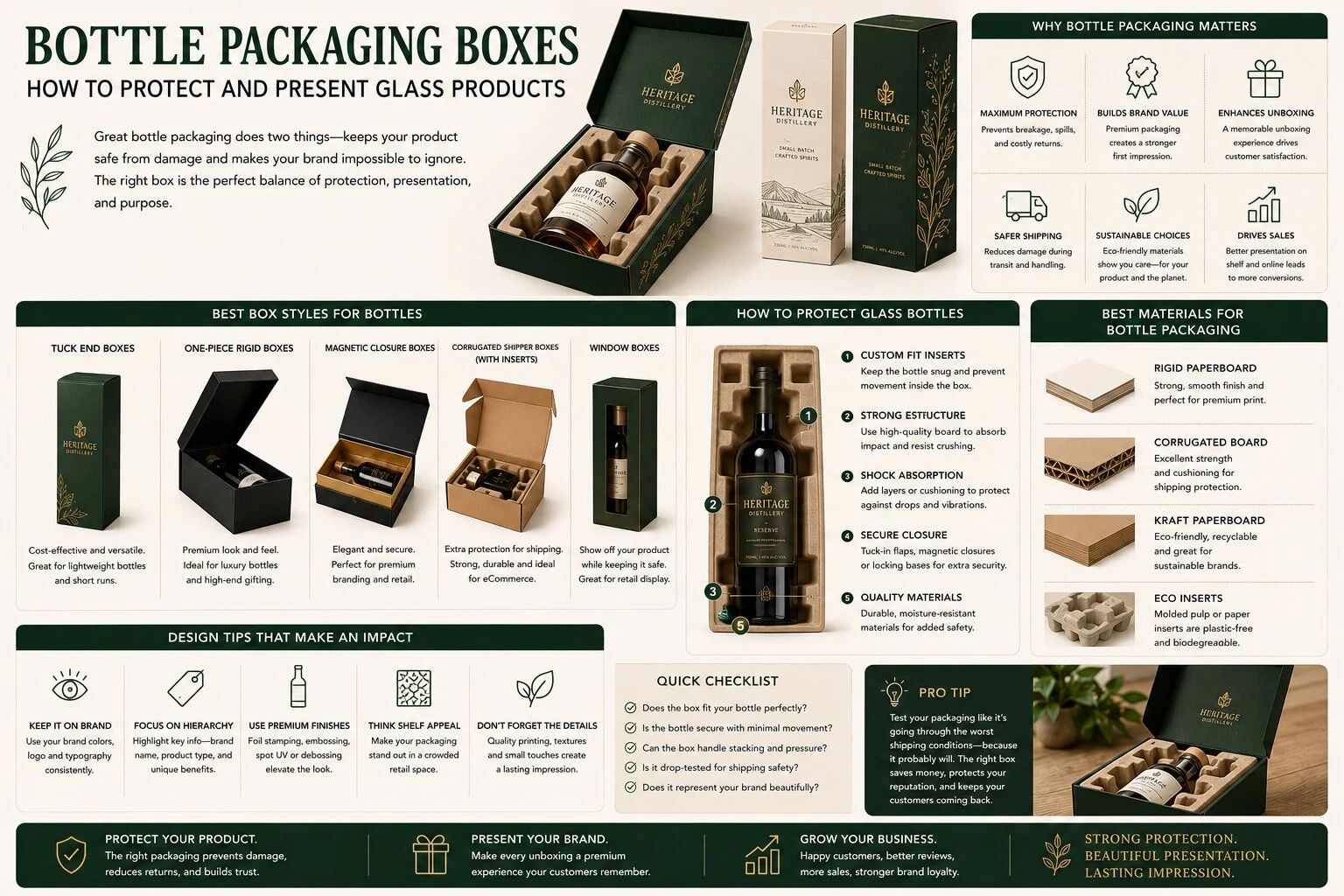
Custom-Fit Tuck End Boxes
One of the most practical solutions for retail bottles.
Best for:
- CBD tinctures
- Small skincare serums
- Essential oils
- Single retail bottles
Why they work:
The box dimensions closely match the bottle dimensions.
When properly sized, movement is minimized without requiring complex insert systems.
Many brands using custom CBD boxes rely on precisely fitted tuck-end structures because they balance protection, branding, and compliance requirements effectively.
Rigid Bottle Boxes
Premium presentation with enhanced protection.
Best for:
- Luxury skincare
- Premium CBD collections
- Wine gifting
- High-value wellness products
Why they work:
Rigid construction protects fragile bottles while communicating premium value.
Customers immediately perceive the difference.
Corrugated Bottle Mailers
Best for:
- Ecommerce fulfillment
- Subscription skincare programs
- Direct-to-consumer wine brands
Why they work:
Corrugated materials absorb impacts significantly better than standard paperboard cartons.
This is one reason many ecommerce brands incorporate strategies discussed in our mailer box shipping damage guide.
Bottle Gift Boxes
Presentation-first packaging.
Best for:
- Wine gifting
- Luxury CBD collections
- Premium wellness kits
Why they work:
The packaging becomes part of the gifting experience rather than simply protecting the product.
Multi-Bottle Packaging
Designed to secure multiple products together.
Best for:
- Wine collections
- Skincare bundles
- CBD product kits
Why they work:
Better organization and lower shipping costs per item.
Sleeve Bottle Packaging
A minimalist branding solution.
Best for:
- Retail presentation
- Premium shelf display
- Boutique product collections
Why they work:
Sleeves add visual branding without requiring a fully customized carton.
Insert Systems for Glass Bottles – Preventing Movement and Breakage
This is where most successful bottle packaging systems separate themselves from average ones.
The box matters.
The insert matters more.
Foam Die-Cut Inserts
The most reliable protection available.
How they work:
Custom-cut foam surrounds the bottle and prevents movement in all directions.
Best for:
- Fragile glass
- High-value products
- Long-distance shipping
- Premium skincare
Foam inserts remain the gold standard for protection.
Cardboard Tube Inserts
A more economical alternative.
How they work:
Cardboard supports the bottle at the neck and base, preventing tipping.
Best for:
- CBD tinctures
- Small skincare bottles
- Mid-range products
They provide surprisingly effective protection at a lower cost.
Molded Pulp Inserts
A sustainability-focused solution.
How they work:
Recycled fiber is molded to match bottle dimensions.
Best for:
- Eco-conscious brands
- Organic skincare
- Natural supplements
These inserts are biodegradable and increasingly popular.
Corrugated Cell Dividers
Essential for multi-bottle packaging.
How they work:
Each bottle sits inside its own compartment.
Best for:
- Wine shipments
- Multi-bottle kits
- Subscription boxes
Without dividers, bottles often collide during transit.
Air Pillow Systems
Useful for filling empty space.
Best for:
- Irregular bottle shapes
- Mixed-product shipments
- Secondary shipping protection
How to Choose the Right Insert
A practical guideline:
- High-value glass → Foam inserts
- Mid-range products → Cardboard inserts
- Sustainable brands → Molded pulp
- Multi-bottle shipments → Cell dividers
- Mixed shipments → Air pillows
The Rattling Test
Here’s a simple test every brand should perform.
Fill your packaging.
Close the box.
Shake it gently.
If you hear movement, you need additional protection.
The rattling test catches problems before customers do.
CBD Oil and Skincare Bottle Packaging Specifically
CBD and skincare brands face packaging challenges that other bottle categories often avoid.
Why These Products Are Different
Common issues include:
- Fragile dropper assemblies
- Thin glass tincture bottles
- Compressible pump dispensers
- Limited support surfaces on serum bottles
These products require more than generic packaging.
CBD Tincture Best Practices
Successful CBD oil packaging systems often include:
- Die-cut foam inserts
- Precise carton dimensions
- Tamper-evident closure compatibility
- Space for compliance labeling
Many brands designing custom CBD boxes also integrate packaging strategies discussed in our CBD oil box design guide because regulatory requirements and product protection must work together.
Skincare Serum Best Practices
For skincare products:
- Foam inserts provide excellent protection
- Cardboard inserts work for lighter bottles
- Pump heads should remain protected
- Packaging presentation should align with product pricing
Luxury skincare products often justify premium rigid bottle boxes because customers expect elevated presentation.
Why Presentation Matters
Protection prevents damage.
Presentation influences perception.
Research shows 72% of consumers say packaging design influences their perception of product quality in the wellness category.
For CBD and skincare brands, packaging becomes part of the product experience.
Wine and Spirits Bottle Packaging
Wine packaging creates a different set of challenges.
What Makes Wine Different?
Wine bottles are:
- Heavier
- Taller
- Frequently purchased as gifts
- Expected to feel premium
These factors influence structure selection.
Single Bottle Solutions
Popular options include:
- Tall tuck-end cartons
- Rigid wine gift boxes
- Kraft wine boxes with handles
Each serves a different audience and price point.
Multi-Bottle Solutions
Common formats include:
- Two-bottle carriers
- Four-bottle gift sets
- Six-bottle shipping cartons
Proper dividers become essential at this stage.
Wine Gift Packaging
Gift-ready wine packaging often includes:
- Tissue paper
- Ribbon systems
- Premium inserts
- Presentation-focused structures
The goal is creating packaging that doesn’t require additional wrapping.
Corporate Wine Gifting
Many businesses use wine gifting programs for:
- Client appreciation
- Holiday campaigns
- Executive gifts
Presentation becomes particularly important.
Shipping Regulations
Wine shipping laws vary by state.
Always ensure packaging supports applicable legal and carrier requirements before launching a wine shipping program.
Retail vs Ecommerce Bottle Packaging Decisions
Different sales channels require different packaging priorities.
Retail Shelf Packaging
Primary Goal: Visual appeal
Best Structures:
Key Question:
How does the package look from three feet away?
Ecommerce Shipping
Primary Goal: Protection
Best Structures:
- Corrugated bottle shipping boxes
- Foam insert systems
Key Question:
Can the package survive five to seven carrier touchpoints?
Gift Retail
Primary Goal: Presentation
Best Structures:
- Rigid bottle gift boxes
- Premium folding cartons
Key Question:
Does it feel gift-ready immediately?
DTC Subscription Programs
Primary Goal: Consistency
Best Structures:
- Branded corrugated mailers
- Standardized insert systems
Key Question:
Can this experience be repeated efficiently every month?
Eco-Friendly Bottle Packaging Options
Sustainability has become increasingly important for bottle brands.
Fortunately, several practical solutions exist.
Molded Pulp Inserts
Replacing foam with molded fiber remains one of the most popular sustainability upgrades.
Recycled Corrugated Boxes
Excellent for ecommerce shipping.
They reduce environmental impact while maintaining protection.
FSC-Certified Cartons
Helpful for brands emphasizing responsible sourcing.
Biodegradable Void Fill
Paper-based alternatives can replace many plastic fillers.
Right-Sized Packaging
One of the simplest sustainability improvements is reducing unnecessary space.
Benefits include:
- Less material use
- Lower shipping costs
- Improved protection
Brands That Benefit Most
Eco-friendly bottle packaging aligns particularly well with:
- Organic skincare
- CBD wellness brands
- Natural supplements
- Artisan food companies
For these businesses, sustainability messaging often complements the overall brand story.
Conclusion
Successful bottle packaging starts with one goal: eliminate movement. Once the bottle is secure, you can build branding, presentation, and customer experience around that foundation.
If you’re evaluating new packaging, start with the basics. Measure your bottle precisely. Choose the closest-fitting carton possible. Then add foam, cardboard, molded pulp, or another insert system to eliminate rattling and movement. Those steps alone solve most bottle shipping problems.
From there, presentation becomes much easier to optimize.
Explore our custom bottle boxes including tincture packaging, wine gift boxes, and corrugated shipping formats for glass product brands across the United States