

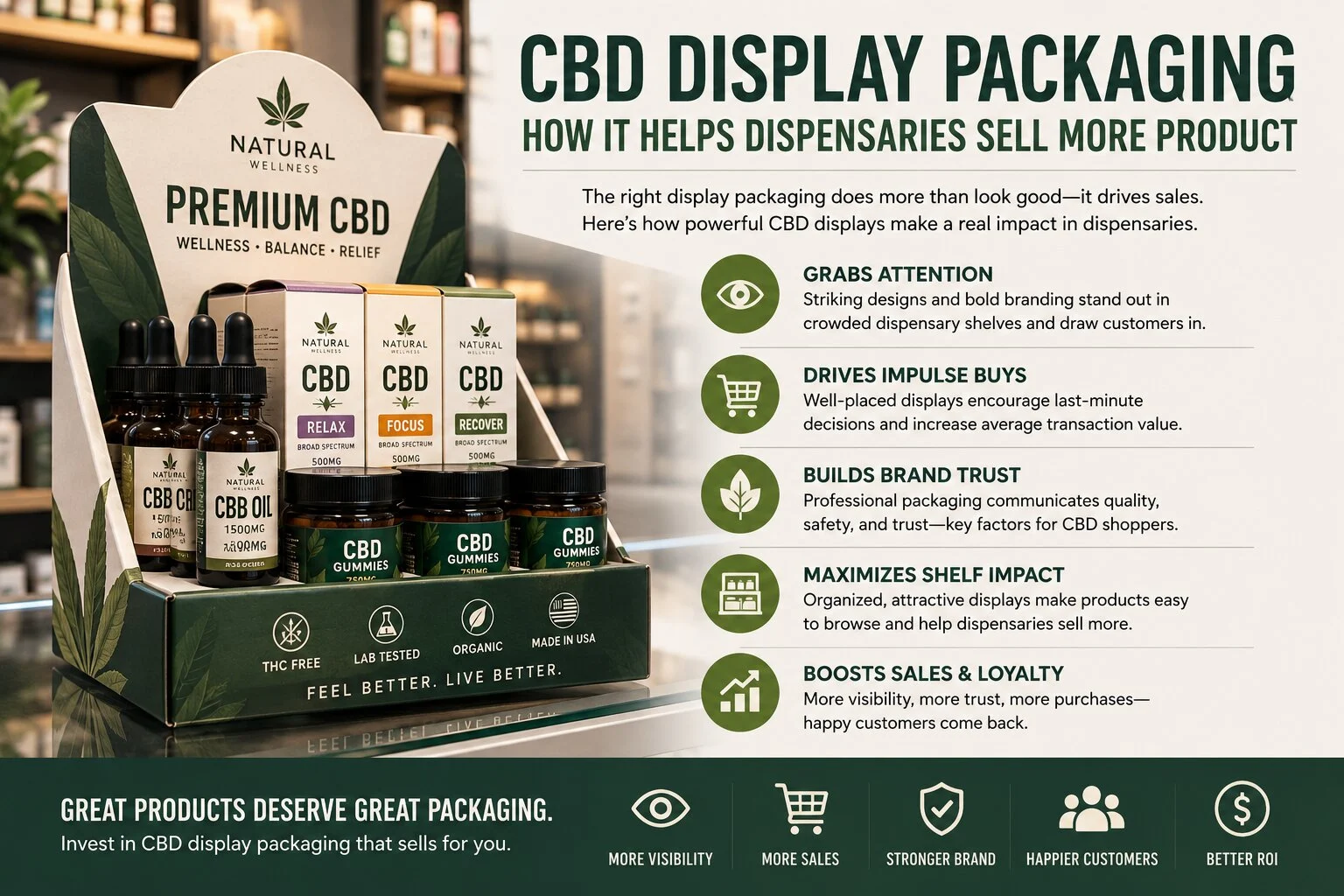
A CBD brand I worked with had a problem that wasn’t related to product quality, pricing, or inventory. Their products kept getting pushed to lower shelves in dispensaries and wellness stores because staff struggled to organize the range. Some tinctures were packaged differently from gummies. Topicals used different sizing standards. Labels looked inconsistent. Customers often needed help understanding the product lineup, and employees spent valuable time explaining where everything fit.
After introducing custom CBD display boxes and standardized display packaging, things changed quickly.
Products were grouped logically. Staff could navigate the collection more easily. Customers spent less time feeling confused. Most importantly, sell-through rates improved because the product line became easier to shop.
CBD retail presents challenges that many other categories don’t. Customers frequently ask questions before buying, product formats vary widely, and staff education plays a major role in the shopping experience.
That’s why CBD display packaging isn’t just about presentation. It helps solve multiple retail problems at the same time: organization, visibility, and customer education.
Point-of-purchase displays generate up to $0.20 additional revenue per shopping trip according to POPAI retail research.
If you’re selling through dispensaries, wellness stores, or health-focused retail locations, understanding display packaging can have a direct impact on how your products perform.
Why CBD Retail Is Different from Other Product Categories
Walk through a dispensary or wellness store and compare the CBD section to a typical snack aisle.
The difference is obvious.
Most snack buyers know exactly what they’re purchasing. CBD customers often need more information before making a decision.
Many are first-time buyers.
Others are comparing multiple product formats.
Common CBD categories include:
- Oils and tinctures
- Gummies
- Topicals
- Capsules
- Vape products
- Bath products
Without clear organization, these options can become overwhelming.
Customers may struggle to understand differences between product types, strengths, or intended uses.
That’s where retail staff become incredibly important.
Unlike many consumer packaged goods, CBD sales frequently involve employee interaction. Staff answer questions, explain product differences, and help customers navigate available options.
Well-designed dispensary display packaging makes those conversations easier.
When products are organized logically, staff spend less time searching and more time helping customers.
The result is a smoother shopping experience for everyone involved.
Types of CBD Display Packaging
Different retail environments require different display solutions.
The best display format depends on product type, available space, and how customers interact with the category.
Countertop Tray Displays
Countertop trays provide open access to products at checkout areas and consultation counters.
These displays work particularly well for:
- Trial-size products
- Lower-cost CBD items
- Checkout purchases
- Introductory products
They also allow staff to quickly retrieve products during customer conversations.
In busy dispensaries, that speed matters.
Tiered Display Systems
Tiered displays organize products across multiple levels.
They’re especially effective for CBD oil collections with different strengths, formulas, or package sizes.
Instead of placing products in a single row, tiering creates a visual hierarchy.
Customers can more easily understand how products relate to one another.
POP Display Stands
POP display CBD systems create dedicated branded spaces within larger retail environments.
These displays work best for:
- Larger product collections
- High-volume retailers
- Dedicated CBD sections
- Multi-product launches
They help establish a stronger retail presence while improving organization.
Window Display Packaging
Window displays allow customers to see actual products inside the display structure.
This approach works particularly well for:
- CBD gummies
- Gift sets
- Premium packaging formats
- Visually appealing products
Product visibility often reduces hesitation because customers can immediately see what they’re purchasing.
Header Card Displays
Header cards extend above display structures and increase visibility.
In multi-brand dispensaries, this additional height can make a significant difference.
Header displays help improve:
- Brand recognition
- Product identification
- Category navigation
- Shelf visibility
For brands competing alongside numerous alternatives, that’s valuable retail real estate.
How CBD Display Packaging Helps Retail Staff Sell More
One reality of CBD retail is that employees often influence purchasing decisions.
When staff can locate products quickly and explain product differences efficiently, the entire customer experience improves.
Well-organized displays support:
- Faster customer service
- Cleaner recommendations
- Easier upselling opportunities
- Faster restocking
Color-coded display systems are particularly useful.
For example:
- Different concentrations can use different color zones.
- Product categories can occupy dedicated display rows.
- Educational information can appear on header cards.
This visual organization helps both customers and employees.
A Practical Example
A growing CBD brand introduced tiered countertop displays across several dispensary partners.
Previously, products were arranged inconsistently on shelves.
After switching to standardized displays:
- Staff located products faster.
- Product categories became easier to explain.
- Retail presentation improved.
- Product recommendations became more consistent.
The packaging didn’t change the products themselves.
It changed how people interacted with them.
Studies show 72% of consumers say packaging design influences their perception of product quality in the wellness category.
That’s one reason display organization matters so much.
QR Codes and Product Education in CBD Display Packaging
Education is one of the biggest challenges in CBD retail.
Customers frequently want more information than can fit on a product label.
Display packaging can help bridge that gap.
How QR Codes Support Education
QR codes can connect customers to:
- Third-party test results
- Product information pages
- Ingredient sourcing details
- Brand education resources
- Customer reviews
This approach gives customers access to more information without overcrowding the packaging.
Benefits for Retail Staff
When educational resources are easily accessible, staff spend less time answering repetitive questions.
That creates a more efficient retail environment while still supporting customer confidence.
Placement Recommendations
QR codes typically perform best when placed:
- On display side panels
- Near educational messaging
- On header cards
- Adjacent to product category descriptions
Visibility matters.
Customers shouldn’t have to search for them.
Compliance Considerations for CBD Display Packaging
Compliance should always be part of the display planning process.
Display packaging needs to support—not replace—individual product compliance requirements.
Label-Ready Surfaces
Displays should provide space for:
- Product information
- Required notices
- Category identification
- Retail-specific information
Warning Label Placement
If warning information is required, display structures should accommodate those requirements without interfering with product visibility.
Child-Resistant Product Integration
Many CBD products use child-resistant packaging at the individual product level.
Display structures must accommodate those package formats appropriately.
State Variation Matters
Requirements can vary based on:
- Product type
- Jurisdiction
- Hemp-derived versus cannabis-derived products
Always verify current requirements with applicable state regulatory authorities before finalizing packaging specifications.
Compliance expectations change, and staying current protects your business.
Design Principles for CBD Display Packaging That Works
CBD retail environments tend to favor a different design language than many other categories.
Most successful displays emphasize clarity rather than visual overload.
Clean White Space
Crowded displays can make product education more difficult.
White space helps customers focus on key information.
Minimal Color Palettes
Many wellness-focused brands rely on restrained color systems rather than aggressive graphics.
Wellness-Oriented Typography
Typography should support readability first.
Customers often engage with educational content while browsing.
Natural Material Textures
Kraft textures and matte finishes frequently perform well because they communicate authenticity and quality.
Matte vs Gloss
In many CBD retail environments, matte finishes outperform gloss.
They reduce glare and create a more refined presentation.
Choosing the Right Material Direction
Consider the brand positioning:
Kraft textures work well for:
- Natural brands
- Organic positioning
- Ingredient-focused storytelling
White stock works well for:
- Clinical aesthetics
- Professional presentation
- Modern wellness branding
Soft color accents work well for:
- Lifestyle-focused collections
- Product segmentation
- Retail organization
The goal is balancing brand identity with practical merchandising needs.
Measuring Whether Display Packaging Is Working
Many brands install displays and then never evaluate performance.
That’s a missed opportunity.
Track measurable outcomes after introducing new display packaging.
Sell-Through Rate by Location
Compare performance across retail partners.
Strong displays often improve product movement.
Staff Feedback
Employees interact with displays every day.
Their feedback is extremely valuable.
Ask:
- Is restocking easier?
- Are products easier to locate?
- Do customers seem less confused?
Customer Questions
When educational displays work effectively, repetitive questions often decrease.
That’s a useful indicator.
Reorder Frequency
Retail partners that reorder more frequently may be benefiting from stronger merchandising performance.
When to Upgrade
Tray displays often work well initially.
As product ranges expand, tiered systems may become more effective.
Pay attention to performance metrics and adjust accordingly.
Conclusion
CBD display packaging does much more than hold products. It helps organize product ranges, supports customer education, improves retail visibility, and makes life easier for dispensary staff.
For most brands, the smartest starting point is a countertop tray display positioned near checkout or consultation areas. As retail placement grows and product lines expand, tiered systems and larger POP displays can create stronger merchandising opportunities.
The key is building displays that help both customers and employees navigate the category efficiently while maintaining compliance and brand consistency. Explore our custom CBD boxes and display packaging systems designed specifically for dispensary retail, wellness stores, and CBD brand merchandising across the United States.