

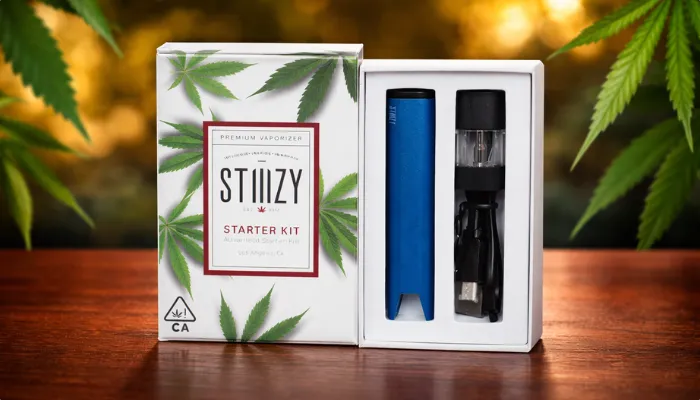
The Custom Electronic Cigarette Boxes one of the fastest-growing product categories in the world, and with that growth comes fierce competition on retail shelves, online marketplaces, and in vape shops. If you are launching a new e-cig product, scaling an existing vape brand, or sourcing packaging for a private-label line, your box is doing more work than you might realize. Custom electronic cigarette boxes are not just containers. They are brand ambassadors, compliance vehicles, and silent salespeople, all at once. In this complete guide, we will walk you through everything you need to know: from choosing the right material and print process to navigating complex labeling regulations and controlling your per-unit packaging costs.
What Are Custom Electronic Cigarette Boxes?
Custom electronic cigarette boxes are purpose-built packaging solutions designed specifically for e-cigarettes, vape pens, pod systems, disposable vapes, and electronic nicotine delivery systems (ENDS). Unlike generic or blank cigarette boxes, custom e-cig packaging is engineered around the unique physical dimensions, regulatory requirements, and brand identity of your specific product.
These boxes differ from traditional tobacco packaging in a few important ways:
- Product shape variety: E-cigarettes come in pens, pods, box mods, and disposables, each requiring different structural box designs.
- Technology components: Many e-cig products include USB chargers, cartridges, or refill bottles that must be protected and presented cleanly inside the box.
- Regulatory landscape: The compliance requirements for electronic nicotine products are distinct and rapidly evolving compared to traditional cigarette boxes.
- Consumer expectations: Vape consumers skew younger and more design-conscious. Premium unboxing experiences and bold visual aesthetics drive purchasing decisions heavily in this market.
Whether you need custom cardboard cigarette boxes for a disposable vape line or rigid presentation boxes for a premium pod system, the fundamentals of good e-cig packaging apply across all formats.
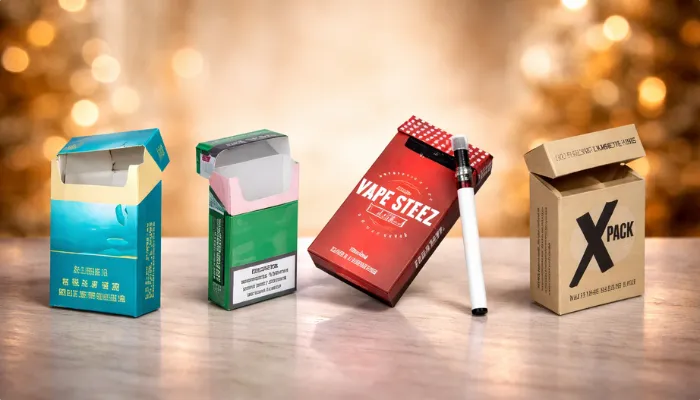
Custom cigarette boxes
See our guide: Custom Cigarette Boxes Wholesale in USA
Why Custom Packaging Is Non-Negotiable for E-Cig Brands
Walk into any vape shop or browse any major e-commerce platform and you will immediately notice something: the brands that win shelf space and click-through attention all have outstanding packaging. Generic blank cigarette boxes simply do not cut it in this category.
Here is why investing in custom electronic cigarette boxes pays off:
Brand Recognition at the Point of Decision Most vape purchasing decisions are made impulsively, at the counter, on a product listing page, or while browsing a dispensary shelf. A distinctive box with strong visual identity, clear product communication, and premium finishing gives your product the best possible chance of being picked up over a competitor.
Trust and Perceived Quality Consumers associate packaging quality directly with product quality. A flimsy, poorly printed box signals a cheap product regardless of what is inside. A well-constructed custom box tells the customer that your brand cares about details and can be trusted.
Compliance as a Competitive Moat E-cigarette regulations are tightening globally. Brands that invest in compliant packaging from the start avoid costly reformatting, product seizures, and reputational damage. As competitors scramble to catch up with new regulations, a compliance-ready packaging program becomes a real competitive advantage.
For an overview of how personalized packaging drives value across the entire tobacco and vaping category, see our complete guide to custom cigarette boxes.
Types of Custom Electronic Cigarette Boxes
Before diving into design and materials, it helps to understand the different structural box types used in the e-cig category and when each is most appropriate.
Tuck-End Boxes (Folding Cartons)
The most common format for e-cig packaging. A flat sheet of custom cardboard cigarette box stock is printed, die-cut, and folded into a tuck-end box, either straight-tuck or reverse-tuck style. These are cost-effective, lightweight, and ideal for disposable vapes, pod packs, and cartridge refills. They are the go-to choice for high-volume, value-positioned products.
Flip-Top (Hinged Lid) Boxes
Empty paper flip top cigarette boxes adapted for e-cigarettes are a natural choice for brands that want to position their product alongside traditional cigarettes or occupy premium shelf real estate in convenience stores. The flip-top format is familiar to consumers and offers a satisfying opening mechanism that reinforces quality.
Sleeve and Tray Boxes
A rigid or semi-rigid inner tray holds the device securely while a printed outer sleeve slides off to reveal it. This two-piece format is extremely popular in the mid to premium vape market because it creates a dramatic, memorable unboxing experience without the cost of a full rigid box setup.
See our guide: Custom Vape Boxes: Branded Vape Packaging That Sells
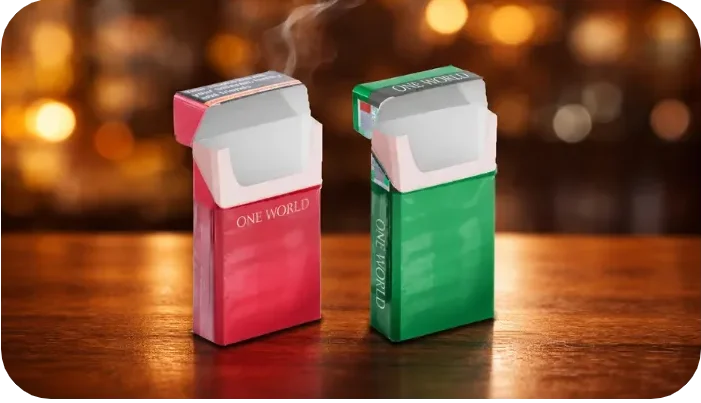
customizable cigarette case
Rigid Setup Boxes
For premium pod systems, luxury vape pens, and gift-set presentations, rigid setup boxes constructed from thick chipboard wrapped in specialty paper deliver the highest perceived value. Think the packaging quality of a high-end smartphone or perfume. These boxes are significantly more expensive than folding cartons but command premium retail shelf placement and justify higher price points.
Window Boxes
A die-cut window covered with clear PET film allows consumers to see the actual product before purchase. Particularly effective for visually striking devices or products with distinctive colors and design details that you want to highlight at point of sale.
Custom Cardboard Cigarette Boxes for Multipacks
Brands selling multi-pack vape cartridges, pod bundles, or starter kits often use custom cardboard cigarette boxes in a larger-format configuration. These can include internal partitions, foam inserts, or vacuum-formed trays to keep multiple components organized and protected.
Design Options for Custom Electronic Cigarette Boxes
Structural Design Considerations
Good e-cig box design starts with structure, not graphics. Before you brief a designer on artwork, nail down the following structural elements:
- Accurate internal dimensions: Your box must fit your device snugly with no more than 2 to 3mm of clearance on each side. Too loose, and the product rattles and feels cheap. Too tight, and insertion and removal become frustrating.
- Insert or inlay design: Premium products benefit from a custom foam, cardboard, or vacuum-formed plastic inlay that holds the device at a precise angle for a controlled reveal.
- Closure security: For products that will be shipped direct-to-consumer, your closure must survive the rigors of transit. Tuck-end closures with glue dots or tear-strip seals provide added security.
- Regulatory panel placement: Plan your structural design to accommodate mandatory warning panels, nicotine content disclosures, and ingredient listings without compromising your primary brand visual.
See our guide: Custom Electronic Cigarette Boxes: Elevating Your Brand in a Dynamic Market
Graphic Design Best Practices
Once structure is sorted, great graphic design makes your e-cig box stand out on the shelf:
- Use bold, high-contrast color blocking to create instant visual impact from a distance.
- Invest in flavor or variant color-coding if you have a product range. Consistent color systems help consumers navigate your lineup quickly.
- Prioritize typography hierarchy. Product name, variant/flavor, and nicotine strength should be legible at arm’s length.
- Use the full box surface. Side panels, bottom, and inner surfaces are all branding opportunities. A branded inner lid panel creates a premium moment at the point of opening.
- Keep it clean for premium SKUs. In premium positioning, restraint wins. White space, refined typography, and a single hero image often outperform busy, overcrowded designs.
Materials for Custom Electronic Cigarette Boxes
Choosing the right substrate is a balance of aesthetics, functionality, cost, and sustainability. Here are the main options:
SBS (Solid Bleached Sulfate) Paperboard at 300 to 400 GSM
The most widely used material for custom electronic cigarette boxes. SBS board offers a brilliant white surface that produces vibrant, accurate color reproduction. It is available in food-safe grades and accepts all major lamination and finishing treatments. For most vape brands, 350 GSM SBS provides the right balance of rigidity and cost.
Recycled and Kraft Board
Growing in popularity as sustainability becomes a differentiator in the vape market. Kraft-finish boxes, either natural brown or white-lined, communicate an eco-conscious brand position. They work particularly well with earthy, organic, or CBD-adjacent brand identities. Note that Kraft board absorbs ink differently than SBS, so colors will appear more muted. Factor this into your design from the start.
Corrugated Cardboard
For shipping outer cartons, multi-product gift sets, or products that require extra transit protection, corrugated board is the appropriate choice. Single-wall (B-flute or E-flute) corrugated boxes can be fully custom-printed for a branded unboxing experience even at the shipper level.
See our guide: The Ultimate Guide to International Shipping USPS Rates for 2026
Rigid Chipboard for Setup Boxes
Premium e-cig products use 2 to 3mm greyboard wrapped in specialty papers, fabric, or leatherette. This material cannot be printed directly. Instead, a separate printed paper or film wrap is glued over the board. This construction method delivers the most luxurious tactile experience and is the hallmark of truly premium packaging.
Printing and Finishing Options
The combination of print process and finishing determines how your custom electronic cigarette boxes ultimately look and feel.
Print Processes
Offset Lithography is the best choice for large runs of 5,000 or more units where consistent color, fine detail, and Pantone accuracy are priorities. Setup costs are higher but per-unit costs are low at volume.
Digital Printing is ideal for short runs of 50 to 2,000 units, prototyping, and SKU-level personalization. No plate costs, fast turnaround, and the ability to print variable data such as batch numbers, QR codes, and unique serial numbers make digital the right choice for new product launches and limited editions.
Screen Printing is occasionally used for specialty applications, particularly on rigid boxes where a thick, tactile ink deposit adds dimension.

Custom Cardboard Cigarette Boxes
Premium Finishing Techniques
The finishing decisions you make will have more visual impact than almost any other choice:
- Soft-Touch (Velvet) Lamination: Transforms the surface of your box into something that feels luxurious and premium. Hugely popular in the vape market for mid to premium products.
- Gloss Lamination: High-shine, vibrant finish that makes colors pop. Better for bold, energetic brand identities.
- Spot UV Coating: A high-gloss clear varnish applied to specific design elements such as your logo over a matte base, creating a striking and tactile contrast.
- Hot Foil Stamping: Gold, silver, rose gold, or holographic metallic accents for luxury SKUs. Particularly effective on dark backgrounds.
- Embossing and Debossing: Adds a three-dimensional element to logos or design details and reinforces premium brand perception.
- Matte Lamination with Spot UV: The most popular combination in premium vape packaging right now. Clean, sophisticated, and impossible to miss on a shelf.
See our guide: The Ultimate Guide to Cigarette Box Dimensions for Businesses
Compliance and Labeling for Electronic Cigarette Boxes
This is arguably the most important section of this guide. E-cigarette packaging compliance is complex, jurisdiction-specific, and changing rapidly. Getting it wrong can mean product seizures, retail delisting, or significant fines.
United States (FDA / PMTA)
In the US, electronic nicotine delivery systems are regulated by the FDA’s Center for Tobacco Products. All e-cig packaging must include:
- The nicotine addiction warning: “WARNING: This product contains nicotine. Nicotine is an addictive chemical.” in a clearly visible format covering at least 30% of the two principal display panels.
- Manufacturer name and contact information.
- Ingredient and nicotine content disclosure.
- Child-resistant packaging requirements for liquid nicotine products under the Child Nicotine Poisoning Prevention Act (CNPPA).
European Union (TPD2)
Under the EU Tobacco Products Directive (TPD2), e-cigarette packaging must include:
- Combined health warnings covering 30% of the two largest surfaces.
- Ingredient listings and nicotine content per dose.
- Batch number and date of manufacture.
- Track-and-trace serialization codes on every pack.
- Prohibition of promotional claims. Terms like “natural,” “organic,” “light,” or “mild” are banned.
United Kingdom (Post-Brexit)
The UK follows regulations broadly similar to TPD2 but administered independently by the MHRA. Always verify current UK-specific requirements as they evolve separately from EU rules post-Brexit.
General Best Practices
- Build warning panels into your structural design from day one. Retrofitting compliance onto an existing design is expensive and usually results in compromised aesthetics.
- Use a packaging supplier with tobacco and vape regulatory expertise. They will flag issues before production rather than after.
- Review regulations in every market before printing. What is compliant in the US may not be compliant in Canada, Australia, or the EU.
- Version-control your artwork files. When regulations change, you need to be able to update warning panels quickly without rebuilding your entire design.
For a broader overview of compliance considerations across all tobacco packaging formats, refer to our guide on custom cigarette boxes.
See our guide: Cigarette Boxes Packaging Trends Every Tobacco Brand Should Know
Cost Factors for Custom Electronic Cigarette Boxes
Understanding what drives cost helps you make smarter decisions and avoid budget surprises.
What Drives the Price Up
- Low order quantities: Digital printing has no plate costs but higher per-unit prices. Offset is cost-effective only at volume.
- Premium materials: Rigid chipboard setup boxes cost 3 to 5 times more than equivalent folding carton boxes.
- Complex finishing: Each additional finishing process such as foil, emboss, or spot UV adds cost. Combining multiple effects on a single box adds up quickly.
- Custom die tooling: A new structural die costs $200 to $800 as a one-time charge and is essential for non-standard box shapes.
- Inserts and inlays: Custom foam, vacuum-formed plastic, or multi-part cardboard inserts add material and assembly cost.
Indicative Pricing Guide
- Tuck-end folding carton, digital print, matte lamination, 500 units: $0.45 to $0.80 per unit
- Tuck-end folding carton, offset print, soft-touch with spot UV, 5,000 units: $0.15 to $0.28 per unit
- Sleeve and tray box, offset, foil with emboss, 5,000 units: $0.40 to $0.70 per unit
- Rigid setup box, premium finish, 1,000 units: $2.50 to $6.00 per unit
How to Control Costs Without Sacrificing Quality
- Standardize your box dimensions across your product range where possible. Shared tooling across SKUs dramatically reduces die costs.
- Choose one hero finish rather than layering multiple premium effects.
- Use digital printing for new SKUs, then migrate to offset once you have validated demand.
- Order 20 to 30% more than you need on each run. The marginal cost of additional units is far lower than the fixed costs of a new setup run.
Actionable Tips for Getting Your E-Cig Boxes Right
- Always request a physical mock-up before committing to a full production run. Structural issues that are invisible on screen become obvious in your hands.
- Test your box dimensions with the actual product, not just the CAD file. Device tolerances vary between production batches.
- Photograph your boxes professionally before launch. Great packaging photography earns returns across your website, retail sell-sheets, and social media indefinitely.
- Design for the unboxing moment. The first 10 seconds a consumer spends opening your box sets their entire perception of the product inside.
- Use QR codes on-pack to link to product authentication pages, flavor guides, or tutorial videos. It adds utility without adding complexity.
- Brief your manufacturer on your target markets. A good supplier will proactively flag compliance issues before they become expensive problems.
FAQs
Q: What is the difference between blank cigarette boxes and custom electronic cigarette boxes?
A: Blank cigarette boxes are unprinted or minimally printed stock boxes used as placeholders or for internal testing. Custom electronic cigarette boxes are fully designed and printed to your brand specifications, with your artwork, colors, compliance panels, and finishing treatments applied. For any product going to retail or direct-to-consumer, custom boxes are the standard.
Q: Can I get empty paper flip top cigarette boxes designed for e-cigarettes?
A: Yes. The flip-top (hinged lid) format is fully adaptable for e-cigarette products. It is particularly popular for disposable vape products positioned in convenience stores alongside traditional cigarettes. The structural format is the same; only the internal dimensions, artwork, and compliance content differ.
Q: What is the minimum order quantity for custom cardboard cigarette boxes?
A: With digital printing, you can order as few as 50 to 100 custom boxes. Offset printing typically requires 1,000 to 5,000 units as a minimum to justify plate and setup costs. For rigid boxes, MOQs are usually 500 to 1,000 units.
Q: How do I make sure my e-cig boxes pass FDA or TPD2 compliance?
A: Work with a packaging supplier that has specific experience in regulated tobacco and vaping products. Provide them with your target markets upfront and have your compliance counsel review final artwork before approving production. Never rely solely on your printer for compliance sign-off. They can flag obvious issues, but regulatory responsibility sits with you as the brand.
Q: How long does it take to produce custom electronic cigarette boxes?
A: For digital-print folding cartons, lead times are typically 7 to 14 business days. Offset printing with finishing takes 15 to 25 business days. Rigid setup boxes take 20 to 35 business days. New structural tooling adds 5 to 10 business days to any timeline. Always build in buffer for regulatory review and physical proof approval.
Conclusion
In a category as competitive as electronic cigarettes, custom packaging is not a luxury. It is a baseline requirement for any brand that wants to be taken seriously. Your custom electronic cigarette boxes communicate quality, build trust, satisfy regulators, and ultimately drive sales at every touchpoint where a consumer encounters your product. Start with the right structure for your product type. Choose materials that reflect your brand positioning. Invest in at least one premium finishing treatment to differentiate visually. Build compliance in from day one. And always approve a physical sample before you commit to a full run. Whether you are using empty paper flip top cigarette boxes for a convenience-channel disposable line or investing in rigid luxury presentation boxes for a flagship pod system, the principles of great packaging remain constant: protect the product, communicate the brand, satisfy the regulator, and delight the consumer.