

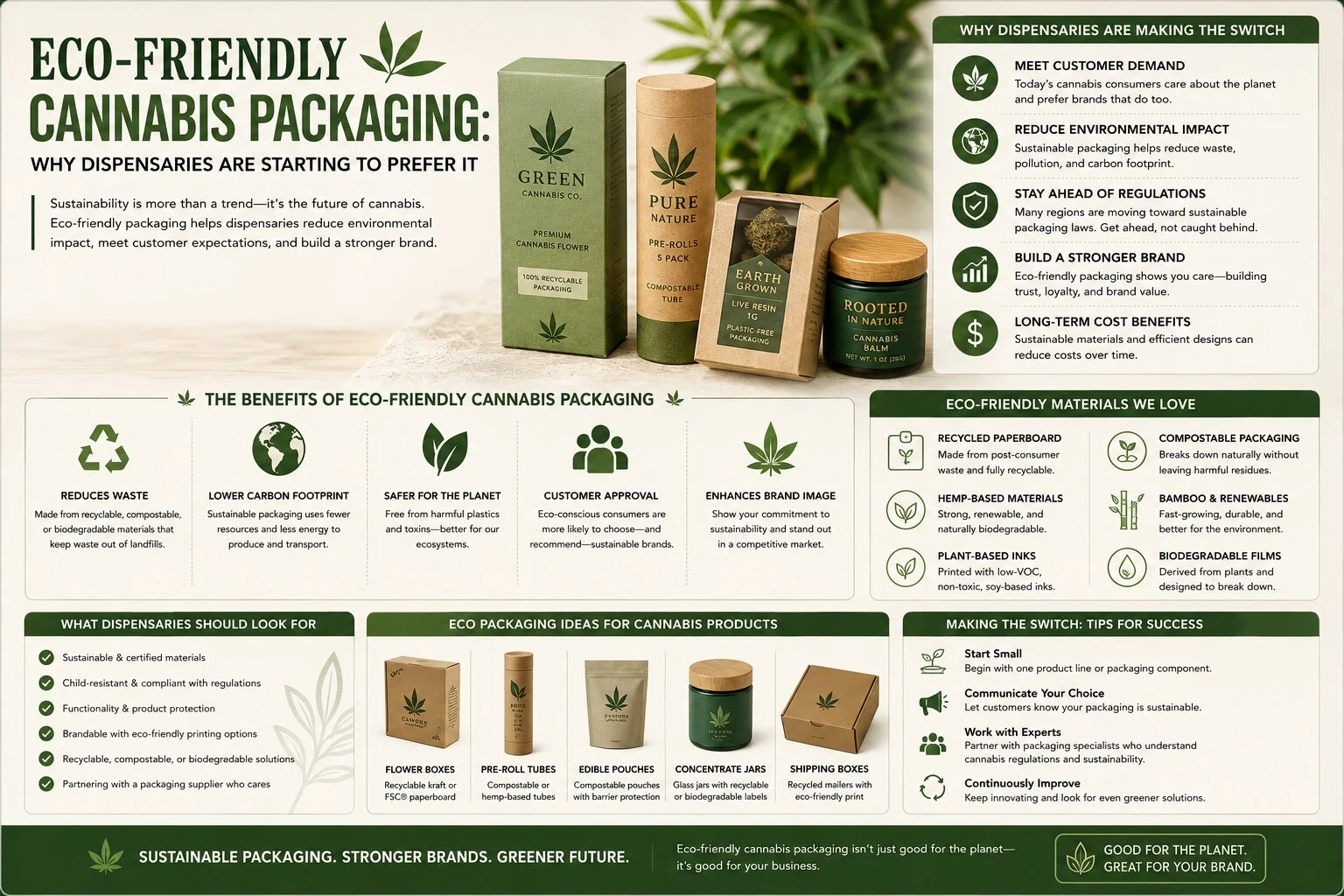
A dispensary buyer is reviewing two competing cannabis brands during a product meeting.
Both products are priced similarly. Both have strong branding. Both meet compliance requirements.
The difference is packaging.
One brand uses plastic-heavy packaging with multiple layers of materials, shrink wrap, and oversized components. The other uses FSC-certified kraft paperboard, minimal structural materials, and recyclable packaging components.
The buyer chooses the sustainable option.
Not because sustainability alone determines purchasing decisions, but because customers have been asking about it. Staff members have noticed the questions. Retail partners are paying attention. The packaging story has become part of the buying conversation.
That’s a shift happening throughout regulated cannabis markets.
Sustainability is no longer just a marketing angle. It’s increasingly becoming a retail differentiator that influences dispensary purchasing decisions and customer perception.
Sustainable packaging demand in the cannabis industry has grown over 45% in the last three years as brands respond to consumer expectations across dispensary and retail channels.
If you’re evaluating your packaging strategy, understanding what eco-friendly cannabis packaging actually means, and how dispensary buyers evaluate it, can help you make smarter decisions about materials, compliance, and long-term brand positioning.
Why Dispensaries Are Asking About Packaging Sustainability
Talk to dispensary buyers today and you’ll notice the conversation has evolved.
A few years ago, packaging discussions focused primarily on compliance, cost, and shelf presentation.
Those factors still matter.
But now buyers often ask additional questions.
What Buyers Evaluate Beyond Product Quality
Modern dispensary buyers increasingly consider:
- Packaging material type
- Recycling compatibility
- Excess packaging and waste
- Brand sustainability messaging
- Material sourcing practices
These conversations aren’t happening in isolation.
They’re being driven by what customers ask in stores every day.
Why the Shift Happened
Several factors are contributing to this change.
Consumer Demand
Cannabis consumers are becoming more aware of packaging waste.
Customers who care about environmental impact frequently ask staff about packaging materials and recyclability.
State-Level Waste Initiatives
Many states continue exploring packaging waste reduction programs and sustainability initiatives.
While regulations vary, waste reduction remains an ongoing conversation across many markets.
Increased Environmental Awareness
Cannabis consumers increasingly evaluate brands based on packaging decisions, not just products.
That influences retail purchasing behavior.
Sustainability as a Sales Tool
One of the most interesting developments is how sustainability supports retail conversations.
When a dispensary employee can explain that a brand uses recyclable materials or FSC-certified paperboard, it creates an additional talking point.
We have seen staff recommend sustainable brands simply because customers asked about packaging.
The product didn’t change.
The story around the product did.
What Eco-Friendly Cannabis Packaging Actually Means
One challenge in the packaging industry is that sustainability is often discussed without being clearly defined.
Let’s make it practical.
FSC-Certified Materials
FSC-certified paper comes from responsibly managed forests that meet established environmental and sourcing standards.
For cannabis brands, FSC certification is one of the most recognizable sustainability indicators available.
Many retail buyers actively look for it.
Recycled Paperboard
Recycled paperboard incorporates post-consumer recycled content into packaging production.
This helps reduce demand for virgin materials while maintaining structural performance suitable for many cannabis packaging applications.
Soy-Based Inks
Soy-based inks use plant-derived components rather than relying entirely on petroleum-based alternatives.
Many cannabis brands include soy-based printing as part of their sustainability initiatives.
Minimal Material Packaging
Sometimes the most sustainable packaging improvement isn’t changing materials.
It’s using less material.
Examples include:
- Sleeve packaging
- Single-layer structures
- Reduced insert systems
- Smaller package footprints
Reducing waste at the source often creates meaningful improvements.
Water-Based Coatings
Water-based coatings can replace certain solvent-based alternatives.
These systems help reduce environmental impact while still supporting print quality and durability.
Plastic Reduction
Many sustainable cannabis packaging projects focus heavily on reducing:
- Plastic windows
- Plastic film layers
- Shrink wraps
- Excess plastic inserts
This remains one of the most common goals among brands pursuing cannabis packaging sustainability.
What Sustainable Packaging Does NOT Mean
A common misconception is that sustainable packaging requires compromise.
It doesn’t automatically mean:
- Lower-quality printing
- Cheap appearance
- Weak structural performance
- Reduced compliance
Well-designed sustainable cannabis packaging can remain highly functional, attractive, and compliant.
How Eco Packaging Affects Cannabis Brand Positioning
Packaging communicates a story before customers ever interact with the product.
That’s especially true in cannabis retail.
The Story Sustainable Packaging Creates
Sustainable materials often communicate:
- Thoughtful sourcing
- Operational responsibility
- Attention to detail
- Long-term brand thinking
Whether intentional or not, customers notice these signals.
Why Kraft Materials Work So Well
Natural kraft textures align naturally with cannabis retail environments.
They often reinforce:
- Craft cannabis positioning
- Organic-focused branding
- Plant-forward product stories
- Minimalist premium aesthetics
Brand Categories That Commonly Use Sustainable Packaging
Eco friendly cannabis packaging often fits particularly well with:
- Organic cannabis brands
- Craft cannabis companies
- Wellness-oriented product lines
- Premium minimalist brands
The Visual Language of Sustainable Packaging
Many successful sustainable cannabis brands share similar design characteristics.
These often include:
- Kraft textures
- Matte finishes
- Limited color coverage
- Clean typography
- Minimal visual clutter
Over 60% of cannabis consumers say they actively prefer brands using sustainable or natural packaging materials according to cannabis industry research.
That preference creates another advantage.
It gives dispensary staff an additional talking point when discussing products with customers.
Eco-Friendly Doesn’t Mean Sacrificing Compliance
This is one of the biggest misconceptions I hear from cannabis brands.
Some assume sustainability and compliance are competing priorities.
They’re not.
Sustainable Packaging Must Still Meet Requirements
Eco-friendly packaging still needs to support:
- Child-resistant mechanisms
- Tamper-evident features
- Warning label placement
- State-specific compliance rules
None of these requirements disappear simply because a package uses sustainable materials.
FSC Paperboard Supports CR Structures
Many FSC-certified paperboard materials work exceptionally well with child-resistant packaging systems.
Sustainability doesn’t prevent the use of compliant structures.
Kraft Stock Handles Compliance Printing
Warning labels, product information, and compliance requirements can be printed successfully on kraft and recycled paperboard materials.
Sustainability and Compliance Work Together
The most successful packaging projects address both objectives simultaneously.
This is particularly important for products that require child-resistant packaging structures. If you’ve already reviewed child-resistant vape packaging requirements, you’ll know that compliance planning early in the design process helps prevent expensive redesigns later.
The same principle applies to sustainable packaging.
Plan for both from the beginning.
Eco-Friendly Finishes That Still Look Premium
Another misconception is that sustainable packaging automatically looks plain.
That’s simply not true.
Many premium finishing techniques work extremely well on sustainable materials.
Matte Lamination
Matte finishes remain one of the most popular choices in cannabis packaging.
They create a clean, sophisticated appearance without excessive visual noise.
Embossing and Debossing
Raised and recessed design elements add texture and perceived value.
These techniques work beautifully on recycled paperboard and kraft materials.
Foil Stamping on Kraft
Gold and silver foil create striking contrast against natural kraft backgrounds.
The combination often feels both premium and authentic.
Spot UV on Recycled Paperboard
Selective gloss coatings create visual contrast while maintaining a refined appearance.
Full-Color Water-Based Printing
Modern water-based printing systems can produce excellent color reproduction while supporting sustainability goals.
Examples of Premium Sustainable Packaging
Some combinations that consistently perform well include:
- Dark kraft stock with gold foil branding
- White recycled paperboard with matte finish
- Minimal sleeves with embossed logos
- Soft-touch recycled cartons with restrained graphics
Matte finishes continue to dominate sustainable cannabis packaging because they align naturally with the category’s visual preferences.
Practical Steps for Switching to Sustainable Cannabis Packaging
Many cannabis brands want to improve sustainability but aren’t sure where to begin.
The good news is that you don’t need to redesign everything at once.
Step 1: Audit Current Packaging Materials
Start by identifying:
- Board materials
- Coatings
- Inks
- Films
- Plastic components
You can’t improve what you haven’t measured.
Step 2: Set Priority Areas
Focus first on your highest-volume products.
Changes made to top-selling SKUs typically create the greatest impact.
Step 3: Verify Compliance Compatibility
Ensure proposed materials support:
- Child-resistant features
- Tamper-evident requirements
- Labeling needs
- State-specific compliance standards
Step 4: Request Material Samples
Never rely entirely on digital mockups.
Physical samples reveal:
- Texture
- Print quality
- Structural performance
- Retail appearance
Step 5: Update Brand Messaging
Once packaging changes are implemented, communicate those improvements.
Update:
- Dispensary sell sheets
- Product catalogs
- Website content
- Retail education materials
Communicating Sustainability to Buyers
Dispensary buyers appreciate specifics.
Instead of vague claims, explain:
- FSC certification
- Recycled content percentages
- Plastic reduction efforts
- Material sourcing improvements
If you’re using FSC-certified materials, certification marks should be displayed according to applicable FSC guidelines and approval requirements.
A Quick Note About Cost
Sustainable materials can sometimes cost slightly more than conventional alternatives.
However, many brands find the additional cost worthwhile because of:
- Improved retail perception
- Stronger dispensary conversations
- Better alignment with consumer expectations
- Long-term brand differentiation
The goal isn’t choosing the cheapest packaging.
It’s choosing packaging that supports your business objectives.
Conclusion
Sustainability has become a meaningful factor in cannabis retail purchasing decisions. Dispensary buyers increasingly evaluate packaging materials alongside product quality, compliance, and shelf presentation because customers are asking more questions about environmental impact.
The good news is that eco-friendly cannabis packaging doesn’t require sacrificing compliance, structural performance, or premium presentation. FSC-certified materials, recycled paperboard, soy-based inks, and plastic reduction strategies can all support both retail goals and regulatory requirements when planned correctly.
For most brands, the smartest starting point is simple: begin with FSC-certified materials on your highest-volume product, evaluate results, and expand from there. Explore our custom vape boxes and custom pre roll boxes with FSC-certified and recyclable material options designed for cannabis brands across the United States.