

Picture a customer picking up a boxed lunch from a busy café during the lunch rush.
Their sandwich, side salad, and cookie are neatly packed inside a single box with a built-in handle at the top. They grab the handle with one hand, carry their coffee in the other, and walk out the door without needing a separate shopping bag.
That’s a gable box doing exactly what it was designed to do.
While packaging trends constantly change, gable boxes remain one of those structures that solves a very specific problem so effectively that entire industries continue using them year after year. Cafés, bakeries, event planners, caterers, and gift companies all rely on them because they combine packaging and portability in a single structure.
The food takeaway and portable packaging market continues growing as consumer demand for convenient, carry-friendly packaging increases across café, bakery, and event catering categories.
If you’re considering gable boxes for your products, this guide explains how they work, where they perform best, what sizes are available, how to customize them, and when they create genuine value compared to standard cartons.
What Is a Gable Box?
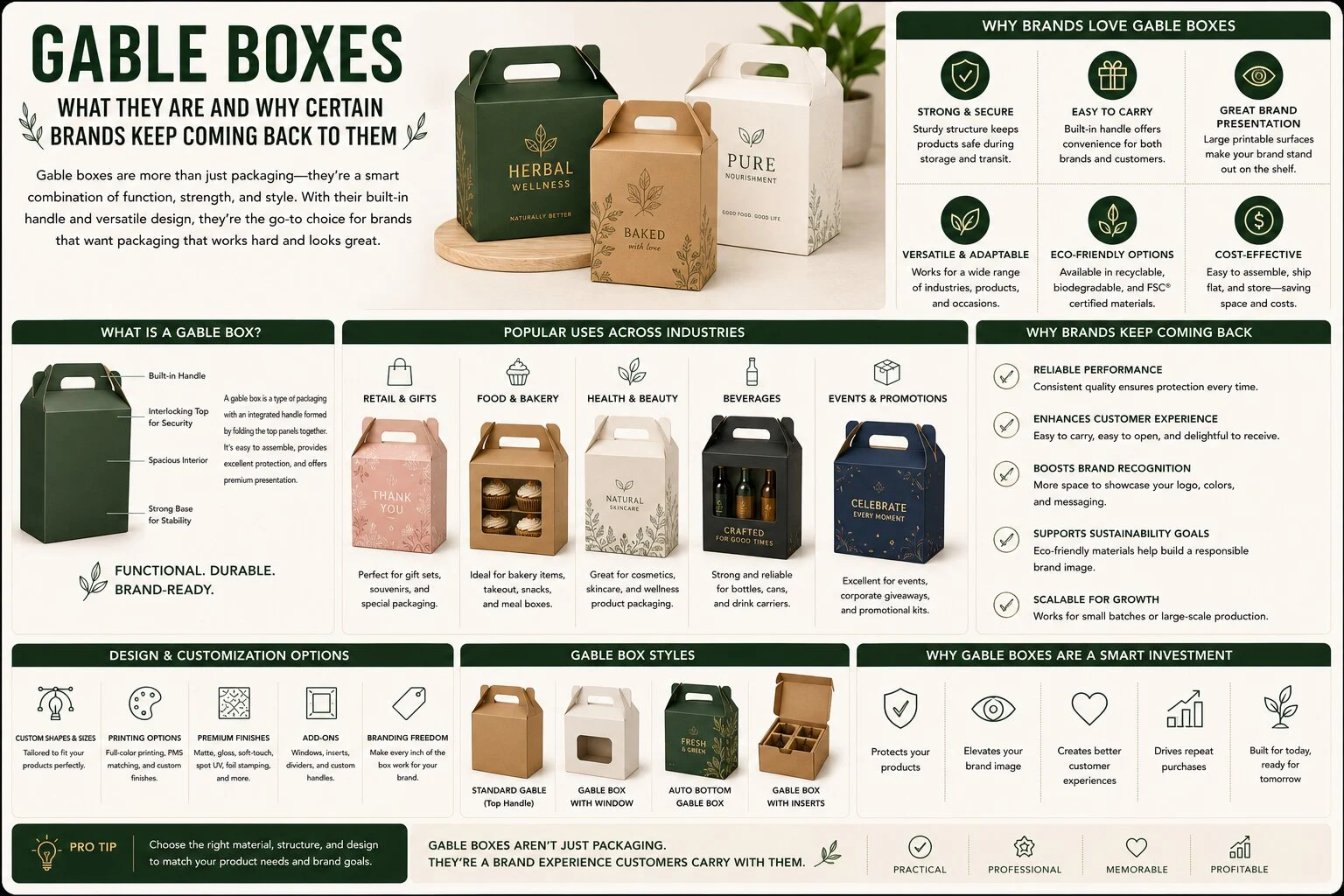
A gable box is a folding carton structure featuring a distinctive peaked top that forms an integrated carrying handle.
Unlike traditional cartons that require a separate shopping bag or carrying solution, the handle is built directly into the box structure itself.
How the Structure Works
A typical gable box consists of:
- Rectangular or square body
- Peaked roof structure
- Interlocking handle panels
- Flat base
When assembled, the roof-like top folds upward and locks together. The interlocking panels create a sturdy handle that can be carried comfortably with one hand.
Why the Handle Matters
The handle isn’t decorative.
It’s structural.
The folded design distributes weight across multiple panels rather than concentrating stress in a single area. This allows properly designed gable boxes to carry surprisingly heavy contents relative to their size.
Fast Assembly
One reason food businesses love gable box packaging is that it arrives flat.
Staff can quickly pop the box open, secure the base, fill the contents, and lock the handle in place within seconds.
No tape.
No glue.
No special tools.
Common Materials
Most paper gable boxes are manufactured from:
- Coated paperboard
- Kraft paperboard
- Food-safe coated stock
- Specialty paper materials
Available Sizes
The format scales easily.
You can find:
- Mini treat boxes
- Individual meal boxes
- Gift packaging sizes
- Large catering formats
That flexibility is one reason the structure remains so popular.
Where Gable Boxes Work Best
Not every packaging style fits every product.
Gable boxes excel in specific situations where portability and presentation matter equally.
Food and Café Businesses
This is arguably the strongest use case.
Common applications include:
- Individual meal boxes
- Bakery treat packaging
- Café pastry boxes
- Boxed lunch programs
- Catering portion boxes
The integrated handle eliminates the need for a separate bag when carrying a single item.
Many cafés find that customers prefer grabbing one handle instead of juggling multiple containers.
Gable boxes also pair naturally with custom food boxes and custom bakery boxes for takeaway programs.
Wedding and Event Favors
Event planners continue returning to gable gift boxes because they combine practicality with presentation.
Popular uses include:
- Guest favor boxes
- Wedding candy stations
- Dessert table takeaways
- Event gift distributions
They arrive flat, store efficiently, and photograph beautifully during events.
That’s particularly valuable for weddings where every table detail becomes part of the visual experience.
Promotional and Corporate Gifting
Corporate events frequently require portable packaging.
Examples include:
- Trade show giveaways
- Promotional merchandise
- Event welcome kits
- Holiday mini gift boxes
The large printable surface area supports logos, messaging, and event branding without requiring additional packaging.
Retail Candy and Snacks
Confectionery businesses often use gable treat boxes for:
- Candy assortments
- Artisan chocolates
- Holiday collections
- Seasonal snack bundles
Window options allow customers to preview contents before purchasing, increasing confidence and impulse purchases.
Craft and Hobby Products
Smaller retail businesses appreciate the affordability and flexibility.
Popular applications include:
- Party favor supplies
- Craft fair packaging
- DIY gift kits
- Hobby collections
They’re easy to customize without requiring expensive packaging systems.
Gable Box Sizes – Matching Size to Product
Size selection influences both presentation and functionality.
Choosing the wrong size often creates more problems than buyers expect.
Mini Gable Boxes
Typically 4–5 inches tall.
Best for:
- Individual candy servings
- Small jewelry gifts
- Wedding favor items
- Product samples
These are especially common in wedding and event packaging.
Standard Gable Boxes
Typically 6–8 inches tall.
Best for:
- Bakery products
- Café snacks
- Individual lunches
- Medium-sized gifts
This is the most widely used size category across food service businesses.
Large Gable Boxes
Typically 9–12 inches tall.
Best for:
- Full meal programs
- Gift collections
- Multiple bakery items
- Event giveaways
The larger handle structure supports heavier contents while maintaining portability.
Catering Gable Boxes
Oversized formats designed specifically for larger food service applications.
Best for:
- Family meal portions
- Catering deliveries
- Event service packaging
- Bulk dessert programs
Weight Matters More Than Size
A common mistake is focusing exclusively on dimensions.
Board strength matters too.
A small box carrying dense products may require stronger paperboard than a larger box carrying lightweight items.
Using Multiple Sizes
Many successful brands use:
- Mini versions for samples
- Standard sizes for daily sales
- Large versions for premium offerings
This creates consistency across product lines while accommodating different needs.
Customizing Gable Boxes for Brand Identity
One reason brands continue investing in custom gable boxes is the surprisingly large amount of printable space.
Printable Areas Include
- Four body panels
- Gable roof panels
- Interior base surfaces
That provides more branding opportunities than many buyers initially expect.
Full-Color Printing
Available through:
- Offset printing for large runs
- Digital printing for short runs
This supports detailed branding and product imagery.
Kraft with Simple Ink
A popular option among artisan food brands.
Kraft materials paired with black or dark green ink often create a handcrafted appearance customers associate with authenticity.
Window Cutouts
Clear PVC windows can be added to:
- Front panels
- Side panels
- Top sections
These work particularly well for baked goods, candies, and gift products.
Customers like seeing what they’re buying.
Foil Stamping
Especially popular for:
- Weddings
- Luxury events
- Premium gifting
Gold and silver foil create a more upscale presentation.
Spot UV
Often used to highlight:
- Logos
- Brand names
- Key design elements
Color Strategy
Successful gable box branding often follows one of three approaches:
Seasonal Colors
Particularly effective during holiday promotions.
Many businesses combine this strategy with holiday gift packaging campaigns.
Brand Colors
Creates consistency across product lines.
Kraft and Natural Tones
Popular among bakeries, cafés, and artisan brands.
Food Safety Considerations for Gable Boxes
Food businesses should pay particular attention here.
Not every paperboard material is appropriate for direct food contact.
Food-Safe Coating Options
Common choices include:
- PE-coated stock
- Food-safe barrier coatings
- Uncoated kraft for dry products
Products Requiring Food-Safe Materials
These include:
- Fresh baked goods
- Pastries
- Cakes
- Sandwiches
- Wraps
- Chocolates
- Candy products
Products That Often Don’t Require Special Coatings
Examples include:
- Wrapped products
- Dry packaged foods
- Promotional items
- Non-food gifts
Grease Resistance Matters
Bakery businesses frequently encounter grease migration issues.
Donuts, pastries, and similar products often require grease-resistant materials similar to those used in specialized bakery packaging.
This is one reason many bakeries evaluate both custom bakery boxes and dedicated donut packaging solutions depending on product type.
Regulatory Considerations
Always verify food-contact requirements using applicable regulatory resources and local guidelines before selecting materials.
Food safety decisions should never rely solely on packaging assumptions.
Gable Boxes for Events and Weddings
Events create unique packaging opportunities because presentation becomes part of the experience.
Wedding Favor Gable Boxes
Common applications include:
- Candy favors
- Small gifts
- Personalized keepsakes
- Thank-you gifts
Corporate Event Packaging
Many organizations use gable boxes for:
- Conference snack kits
- Attendee gifts
- Team appreciation packages
- Promotional giveaways
Coordinating Event Branding
Strong event packaging often mirrors:
- Invitation colors
- Typography
- Graphic motifs
- Event themes
Consistency creates a more professional appearance.
Personalization Options
Popular choices include:
- Guest names
- Custom messages
- Event dates
- Company branding
Planning Timelines
Typical schedules include:
Standard stock boxes: 3–4 weeks
Custom printed gable boxes: 6–8 weeks
Large event programs: 8–10 weeks
Ordering early provides greater flexibility for design revisions and production scheduling.
Wholesale Gable Boxes – When Volume Makes Sense
Eventually, many businesses reach a point where wholesale purchasing becomes more economical.
Signs You’re Ready
Consider gable boxes wholesale when:
- Reordering every month
- Generic packaging limits branding
- Event volume increases
- Additional locations are opening
Wholesale Advantages
Consistent Print Quality
Brand presentation becomes more reliable.
Lower Unit Costs
Volume reduces per-piece pricing.
Better Inventory Planning
Predictable stock levels reduce last-minute ordering.
Custom printed food packaging increases brand recognition by up to 30% compared to generic packaging according to food retail research.
Production Timelines
Most wholesale programs require:
- 6–8 weeks for standard production
- Additional time for specialty finishes
Managing Seasonal Inventory
Many businesses separate inventory into:
- Everyday packaging
- Holiday packaging
- Event-specific packaging
This prevents seasonal stock from interfering with regular operations.
Conclusion
Gable boxes solve a very specific packaging challenge remarkably well. They combine packaging and carrying functionality into a single structure, eliminating the need for separate bags while providing generous branding space.
They’re particularly effective for food businesses, bakeries, cafés, event planners, promotional campaigns, and confectionery retailers where portability matters. At the same time, they aren’t the ideal solution for every application. Very heavy products or luxury items requiring rigid presentation often benefit from alternative packaging structures.