

A subscription brand I worked with hit a familiar growth milestone.
Subscriber numbers were climbing every month. Product sourcing was improving. Marketing was working. Revenue looked healthy.
Yet customer retention wasn’t where it should have been.
The problem wasn’t the products.
It was the packaging.
Every shipment arrived in the same generic brown box with a shipping label and a sticker logo. Products shifted during transit. Opening the package felt no different than receiving a standard ecommerce order. There was no sense of anticipation, discovery, or brand experience.
Customers subscribed because they liked the products. But after a few months, many stopped feeling excited about the delivery itself.
That’s when the company realized something important.
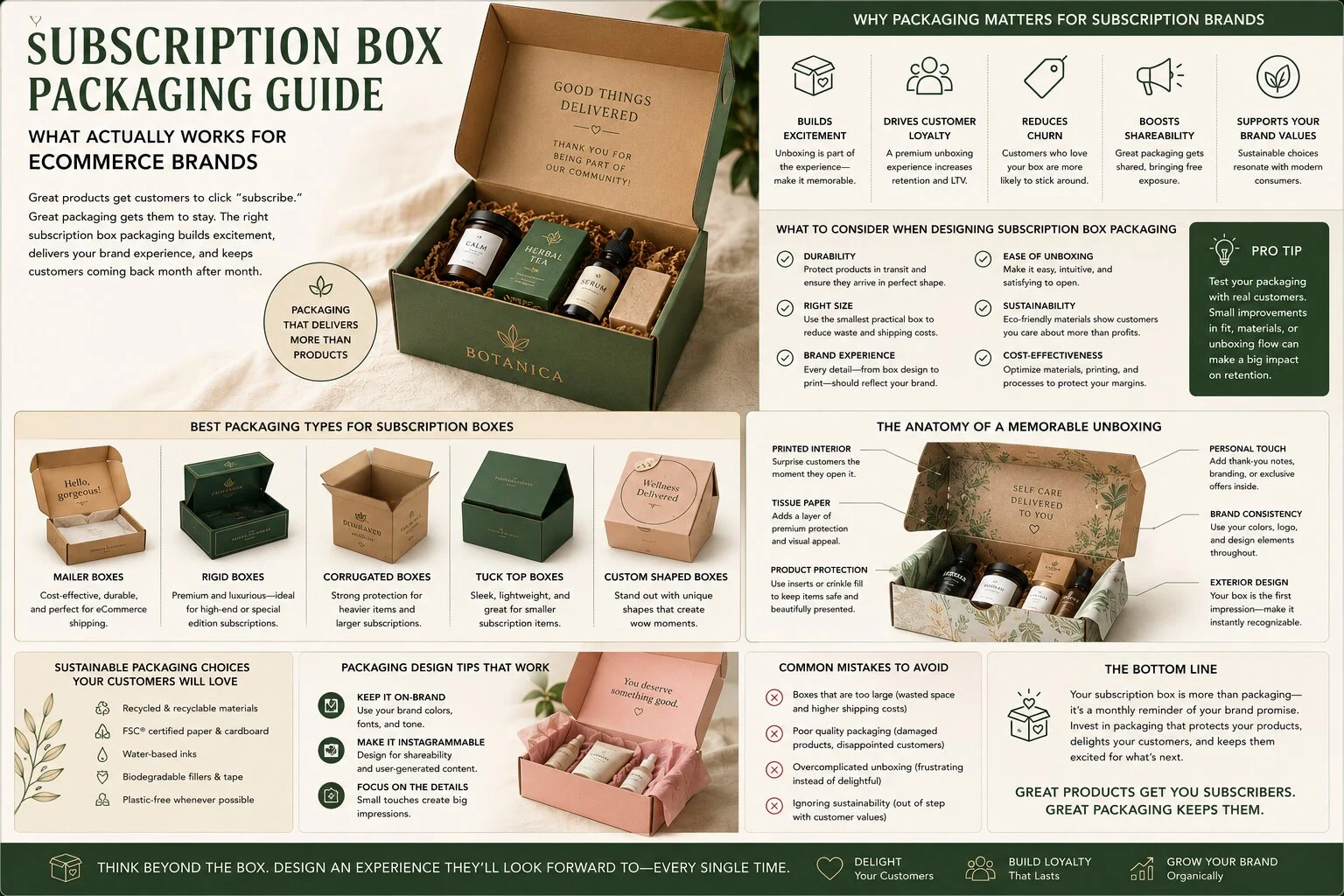
Subscription box packaging isn’t just a shipping container. It’s part of the subscription product.
Ecommerce gift packaging and subscription box orders have grown 34% annually since 2020 as more brands invest in premium fulfillment experiences.
The most successful subscription brands understand that every monthly shipment is another opportunity to reinforce value, strengthen customer relationships, and reduce churn.
This guide covers what actually works in subscription box packaging—from structure and inserts to branding, fulfillment efficiency, and scaling operations without sacrificing customer experience.
Why Packaging Is Part of the Subscription Product
One of the biggest mistakes subscription brands make is focusing exclusively on product curation.
The products matter, of course.
But recurring customers evaluate the entire experience.
That includes packaging.
The Subscription Retention Problem
Most subscription brands face the same challenge:
The first delivery feels exciting.
The second feels familiar.
By month six, novelty has faded.
At that point, quality and consistency carry the experience.
Packaging plays a major role in that transition.
When subscribers repeatedly receive thoughtfully designed deliveries, the experience feels intentional. When every shipment arrives looking generic, excitement tends to diminish faster.
How Unboxing Affects Renewal Decisions
Customers don’t always consciously think about packaging.
But they remember how receiving the package made them feel.
A well-organized box creates anticipation.
A cluttered box creates friction.
Those impressions accumulate over time.
The Content Creator Amplification Effect
Subscription brands benefit from a unique advantage.
Subscribers often create content.
When customers enjoy the unboxing experience, they post:
- TikTok videos
- Instagram stories
- YouTube reviews
- Unboxing reels
That content attracts new subscribers.
Premium Packaging Gets Shared
Studies show 40% of consumers say they have shared a subscription or product purchase on social media when the packaging looked premium.
That’s free exposure most brands would happily pay for.
Why Repeat Customers Judge Packaging More Critically
New subscribers are often forgiving.
Long-term subscribers are not.
As novelty decreases, customers become more attentive to:
- Presentation quality
- Packaging consistency
- Product organization
- Overall experience
That’s why subscription packaging should be viewed as a retention tool, not simply a shipping expense.
Structural Requirements for Subscription Box Packaging
Subscription shipments face challenges that standard ecommerce packaging often doesn’t.
Products change.
Weights vary.
Contents rotate monthly.
The structure needs to handle that complexity.
What Subscription Packaging Must Accomplish
Effective subscription box packaging should:
- Handle repeated monthly shipping cycles
- Protect changing product combinations
- Deliver consistent presentation
- Support interior organization
- Survive carrier handling
Achieving all of that requires choosing the right structure.
Corrugated Mailer Boxes
Corrugated mailers remain the most common choice.
Benefits include:
- Excellent shipping protection
- Strong print surfaces
- Efficient assembly
- Cost-effective production
For most brands, subscription mailer boxes represent the best balance between performance and cost.
Rigid Subscription Boxes
Rigid boxes create a premium experience.
They offer:
- Superior presentation
- Strong perceived value
- Enhanced unboxing moments
They’re especially useful for luxury subscription programs and gift-focused offerings.
However, they cost significantly more and require careful evaluation of ROI.
Kraft Mailer Boxes
Kraft packaging remains popular among:
- Sustainable brands
- Natural product subscriptions
- Artisan-focused businesses
The material communicates authenticity while maintaining good shipping performance.
Choosing the Right Structure
Evaluate:
Product Weight
Heavier products require stronger packaging.
Product Fragility
Fragile items may require additional protection systems.
Brand Positioning
Premium subscriptions often justify premium packaging.
Shipping Distance
Long-distance fulfillment creates additional packaging stress.
The right structure depends on your specific operational realities.
Interior Organization and Insert Systems
Here’s something many brands overlook.
Customers don’t judge the box when it’s closed.
They judge it when it opens.
First Impressions Happen Inside
The moment the lid lifts is the emotional high point of the delivery experience.
That’s where thoughtful organization matters.
Interior Branding Options
Several elements improve presentation significantly.
Printed Interior Panels
Interior messaging reinforces brand identity and creates surprise.
Branded Tissue Paper
Simple and effective.
Tissue immediately upgrades presentation.
Custom Crinkle Fill
Color-coordinated fill helps products stay organized while enhancing appearance.
Ribbon Pull Systems
These create a more gift-oriented experience.
Branded Dividers
Dividers improve organization while strengthening visual consistency.
Insert Systems by Product Type
Different products require different approaches.
Foam Inserts
Ideal for fragile products.
Commonly used for:
- Glass items
- Cosmetics
- Electronics
Cardboard Dividers
Best for multiple products.
Affordable and scalable.
Tissue-Wrapped Products
Adds perceived value without significantly increasing cost.
Ribbon-Tied Presentation
Works particularly well for premium and gift-oriented subscriptions.
Interior Design and Social Content
Unboxing videos depend heavily on what customers see first.
A beautifully organized interior naturally creates better content.
That’s another reason interior packaging deserves attention.
Subscription Box Branding That Works
Strong subscription box branding happens both outside and inside the package.
Exterior Branding Strategy
The exterior creates recognition.
Key elements include:
- Consistent colors
- Visible logos
- Clean typography
- Recognizable design systems
Seasonal Artwork Variations
Minor seasonal updates keep recurring deliveries feeling fresh.
QR Codes
QR codes can connect subscribers to:
- Product tutorials
- Community content
- Behind-the-scenes updates
- Exclusive offers
Social Media Visibility
Your social handles should be easy to find.
Subscribers often share content immediately after receiving deliveries.
Interior Surprise Elements
The inside provides opportunities for deeper engagement.
Examples include:
Personalized Message Cards
A simple note can make deliveries feel more personal.
Month-Specific Inserts
Themed content creates anticipation.
Loyalty Milestone Notes
Acknowledging subscriber anniversaries strengthens retention.
Behind-the-Scenes Content
Customers often enjoy learning about product sourcing and development.
Designing for Unboxing Videos
Think about three visual moments:
- Exterior reveal
- Lid opening
- Product presentation
Each should feel intentional.
Managing Seasonal and Limited-Edition Subscription Packaging
Seasonal packaging can dramatically improve subscriber excitement.
Used strategically, it keeps recurring deliveries from feeling repetitive.
When Seasonal Packaging Makes Sense
Common opportunities include:
- Major holidays
- Seasonal themes
- Anniversary editions
- Collaboration launches
Planning Timelines
Packaging requires lead time.
Plan accordingly.
Standard Seasonal Changes
8-10 weeks
Holiday Editions
10-12 weeks
Collaboration Projects
12-16 weeks
These timelines allow sufficient production and fulfillment planning.
Managing Inventory Transitions
One challenge subscription brands face is transitioning between packaging versions.
Avoid large leftover inventories by forecasting carefully.
Cost-Efficient Seasonal Updates
Not every seasonal initiative requires a completely new box.
Many successful brands keep the exterior consistent and update:
- Inserts
- Tissue paper
- Messaging cards
- Interior graphics
This approach controls costs while maintaining freshness.
Fulfillment Efficiency — Packaging Your Team Can Actually Use
This is where many packaging projects fail.
Beautiful packaging that slows fulfillment creates operational problems.
What Fulfillment-Friendly Packaging Looks Like
The best subscription packaging balances presentation with efficiency.
Look for:
- Assembly times under 30 seconds
- Clear opening orientation
- Pre-scored fold lines
- Simple insert placement
- Efficient storage footprints
Testing Assembly Speed
Before committing to production:
Time your team assembling 10 boxes.
Multiply that average by monthly volume.
The results are often eye-opening.
Saving even 20 seconds per package can significantly reduce labor costs at scale.
Closure Decisions
Custom fulfillment tape works well for many corrugated mailers.
Separate closure systems may make sense for premium subscriptions.
Choose based on volume and operational workflow.
Storage Considerations
Subscription brands often underestimate storage requirements.
Evaluate:
- Warehouse space
- Pallet efficiency
- Inventory turnover
- Seasonal packaging needs
Operational efficiency matters just as much as design.
Wholesale Subscription Packaging — Scaling Without Losing Quality
As subscriber counts grow, packaging operations become more complex.
Wholesale purchasing helps solve several challenges.
Benefits of Wholesale Packaging
Predictable Inventory
Subscription models provide relatively stable forecasting.
Consistent Print Quality
Large production runs reduce variation.
Lower Per-Unit Costs
Economies of scale improve profitability.
Simplified Vendor Management
Fewer orders mean fewer operational headaches.
Forecasting Packaging Inventory
A practical approach:
Use a three-month rolling subscriber average plus a 15% buffer.
This helps reduce stockout risks while avoiding excessive inventory.
Ordering Seasonal Packaging
Place seasonal orders well before launch dates.
Waiting too long limits flexibility.
Managing Multiple Subscription Tiers
Many brands offer tiered programs.
Color-coded packaging systems simplify fulfillment.
For example:
Basic Tier
Standard corrugated packaging.
Premium Tier
Enhanced finishes and upgraded presentation.
Gift Tier
Luxury packaging inspired by premium rigid box structures commonly used in high-end gift programs.
This approach helps fulfillment teams identify products quickly while maintaining clear differentiation.
Conclusion
Successful subscription box packaging serves three functions simultaneously: product protection, brand reinforcement, and customer retention. The strongest programs don’t simply ship products—they deliver a consistent experience month after month.
If you’re evaluating packaging improvements, start with the areas that create the greatest customer impact. Invest first in interior organization, product presentation, and one memorable exterior brand element before upgrading to more expensive materials.
A well-organized box with thoughtful inserts often outperforms an expensive box with poor presentation.
As your subscription business grows, your packaging should evolve alongside it. Explore our custom mailer boxes and subscription packaging solutions designed for ecommerce brands and fulfillment operations across the United States.