

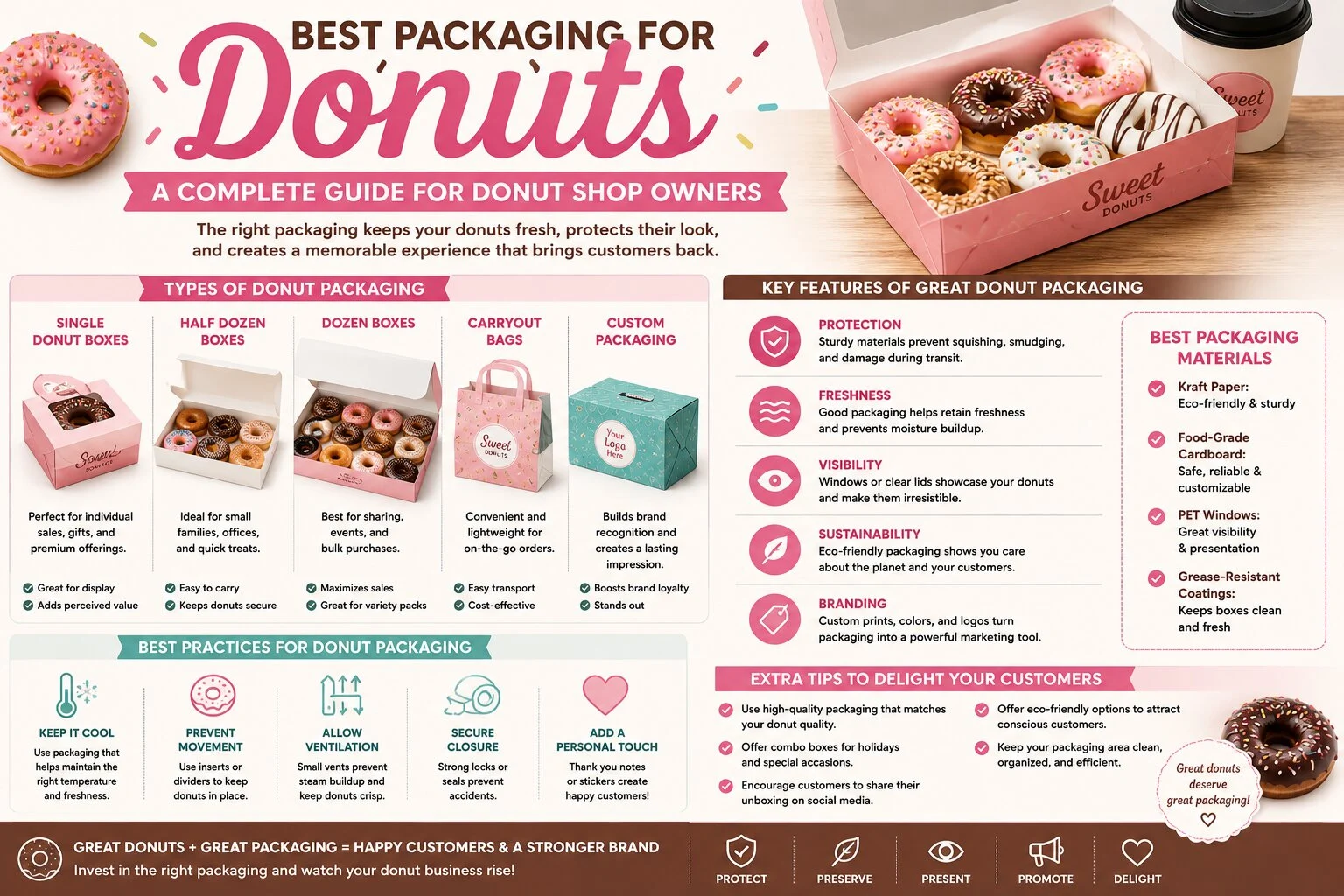
A donut shop owner recently told me about a problem that cost them more repeat customers than they realized. Their donuts looked perfect when they left the store. But after a 25-minute delivery, customers were opening boxes with smeared frosting, shifted toppings, and grease stains visible on the outside of the packaging.
The donuts were excellent.
The packaging wasn’t.
That’s the challenge many bakery operators discover as they grow. Donut packaging is far more complex than most people expect. Unlike cakes, cookies, or muffins, donuts combine grease, delicate glazes, soft textures, and transportation challenges that can quickly turn a premium product into a disappointing customer experience.
Good donuts deserve packaging that protects them and makes them look worth every dollar customers spend.
The US donut industry generates over $7 billion annually, with delivery and takeaway orders now representing a growing share of most donut shop revenue.
In this guide, you’ll learn how to choose the right donut boxes, why grease resistance matters, how inserts prevent frosting damage, when to invest in wholesale packaging, and which packaging styles work best for growing donut businesses.
Why Donut Packaging Is Different from Regular Bakery Boxes
A standard cake box might work perfectly for a birthday cake. That doesn’t mean it will perform well for donuts.
Donuts create packaging challenges that many bakery products don’t.
The first issue is grease.
Even after cooling, fried donuts continue releasing oils that gradually migrate into packaging materials. Without proper protection, boxes can weaken, stain, and lose their professional appearance.
Then there’s frosting.
Glazes, icing, and decorative toppings transfer surprisingly easily during transport. A donut that leaves your kitchen looking flawless can arrive looking damaged if the packaging allows movement.
Multiple donuts create another challenge.
As products shift during transportation, they bump into one another, damaging toppings and creating presentation issues.
Heat and moisture also affect performance. Fresh donuts often release residual warmth that creates condensation inside poorly designed packaging.
That’s why effective donut packaging must:
- Resist grease absorption
- Prevent product movement
- Handle heat and moisture
- Stack efficiently
- Present products attractively
When any of those elements are missing, customer experience suffers.
Donut Box Sizes – Which Configuration Do You Need?
Different customers buy donuts for different reasons. Your packaging should reflect those purchasing habits.
Single Donut Box
Best for:
- Premium specialty donuts
- Gourmet donut shops
- High-end cafes
- Gift purchases
A single donut box transforms a simple purchase into a premium experience.
If you’re selling oversized artisan donuts with elaborate toppings, individual packaging helps justify higher pricing.
2-Pack Donut Box
Best for:
- Couples
- Sharing occasions
- Cafe counter purchases
- Seasonal gifting
Two-pack formats perform especially well during Valentine’s Day promotions and special events.
Customers often view them as a thoughtful small gift.
4-Pack Donut Box
Best for:
- Small family purchases
- Office snacks
- Quick takeaway orders
This size hits a sweet spot between convenience and value.
Many customers find four donuts easier to justify than a full half-dozen.
6-Pack Donut Box
Best for:
- Local donut shops
- Everyday family purchases
- Most retail operations
The six-pack remains one of the most popular formats in the industry because it aligns naturally with customer buying habits.
12-Pack Donut Box
Best for:
- Family gatherings
- Catering orders
- Office deliveries
- Wholesale sales
Because of the weight involved, reinforced bottoms become especially important.
Without additional support, larger boxes can sag or deform during transport.
Choosing the Right Configuration
Review your sales data before investing in packaging.
If 70% of your orders are half-dozens, focus on optimizing that format first. If your business specializes in gourmet donuts, premium single-donut packaging may deserve greater attention.
The best packaging configuration reflects how your customers already buy.
Grease-Resistant Coatings – Why They Matter
One of the biggest mistakes new donut shops make is assuming standard paperboard can handle fried products.
It usually can’t.
Over time, grease penetrates untreated packaging materials.
The result?
- Visible stains
- Structural weakening
- Reduced durability
- Poor customer perception
A customer receiving a grease-soaked box may question product quality even when the donuts themselves are excellent.
Several solutions help prevent these issues.
PE-Coated Board
Polyethylene-coated board creates a barrier that slows grease migration and improves structural integrity.
Grease-Resistant Kraft Paper
Specially treated kraft materials provide a more natural appearance while offering enhanced grease resistance.
Foil-Lined Inserts
Foil barriers create additional protection for products with high oil content.
Barrier Coating Systems
Modern barrier coatings provide grease protection without significantly affecting appearance.
Products That Need Maximum Protection
Grease resistance becomes especially important for:
- Glazed donuts
- Cream-filled varieties
- Fried specialty donuts
- Yeast donuts containing butter
Warm donuts delivered through third-party delivery apps create the highest risk environment.
That’s where grease-resistant packaging earns its value.
Insert Systems – Preventing Frosting Damage
You’ve probably seen it happen.
A customer opens a delivery box expecting beautifully decorated donuts and instead finds icing smeared across the lid.
The culprit is usually movement.
Even careful drivers can’t eliminate every bump, turn, or sudden stop.
Cardboard Dividers
Dividers separate donuts and reduce product-to-product contact.
They’re affordable and work well for standard assortments.
Individual Donut Cushions
Premium products often benefit from individual support structures that keep each donut stable.
Tray Inserts for Multiple Donuts
Trays create designated positions that minimize shifting during transportation.
They’re particularly effective in 6-pack and 12-pack formats.
Foam Base Inserts
Luxury donut brands sometimes use foam systems for highly decorated products.
These inserts provide exceptional stability.
Matching Inserts to Box Sizes
- Single boxes: Individual cushions
- 2-pack boxes: Divided compartments
- 4-pack boxes: Lightweight trays
- 6-pack boxes: Structured inserts
- 12-pack boxes: Reinforced tray systems
Imagine a six-pack traveling for 20 minutes.
Without inserts, donuts slide and collide.
With properly designed trays, they remain separated and presentation stays intact.
That’s a noticeable difference in customer satisfaction.
Custom Donut Boxes with Branding
Packaging doesn’t stop working after customers leave the store.
In many cases, that’s when it becomes most valuable.
Customers frequently photograph:
- The box before opening
- The donuts inside
- Event dessert tables
- Delivery orders
That makes packaging part of your marketing strategy.
Branding Options
Logo Placement
Centered logos create strong brand recognition.
Corner placements often feel more modern and understated.
Full-Color Printing
Ideal for vibrant brands with strong visual identities.
Kraft with Minimal Black Ink
Perfect for artisan donut shops and farmers market operations.
Window Boxes
Window packaging allows customers to preview products before purchasing.
Seasonal Designs
Limited-edition graphics help create excitement throughout the year.
Studies show 40% of consumers say they have shared a food purchase on social media when the packaging looked attractive.
How Window Boxes Help Retail Sales
Window donut boxes perform especially well at retail counters and grab-and-go displays.
Customers can immediately see the product without opening the package.
That visibility often increases impulse purchases.
If you’ve already explored bakery window packaging, you’ll know that visibility can become a powerful sales tool when presentation is one of your strengths.
Custom Donut Boxes Wholesale – When to Scale Production
Many donut shops start with generic packaging.
That’s normal.
Eventually, however, growth creates new requirements.
Signs You’re Ready for Wholesale Packaging
- Reordering boxes every week or two
- Inconsistent packaging sizes
- Weak brand recognition
- Increased delivery volume
- Expansion into delivery apps
Cost Benefits
Wholesale ordering typically reduces per-unit costs substantially.
Larger production runs create efficiencies that aren’t available with small retail purchases.
Operational Benefits
Standardized sizes improve:
- Display consistency
- Inventory management
- Storage efficiency
- Staff training
- Assembly speed
A Real-World Example
A growing donut shop I worked with originally purchased generic boxes from multiple suppliers.
Sizes varied slightly.
Storage became messy.
Brand recognition remained weak.
After switching to custom donut boxes wholesale, they standardized operations, simplified inventory management, and created stronger visual consistency across all locations.
The donuts didn’t change.
Customer perception did.
What to Expect
Most custom packaging projects require planning, artwork approval, sampling, and production lead times.
Allow enough time before major seasonal promotions.
Seasonal Donut Packaging
Few bakery categories benefit from seasonal packaging as much as donuts.
Customers already associate donuts with celebrations, gatherings, and special occasions.
Valentine’s Day
- Heart-shaped boxes
- Pink graphics
- Romantic themes
Halloween
- Orange and black designs
- Seasonal illustrations
- Limited-edition packaging
Christmas
- Festive colors
- Holiday patterns
- Gift-focused presentation
Easter
- Pastel color palettes
- Spring-inspired graphics
Mother’s Day
- Floral elements
- Premium gift formats
Planning Timelines
Order seasonal packaging six to eight weeks before the target season.
Waiting too long can limit production options and create inventory challenges.
Seasonal packaging helps create urgency and encourages repeat visits from customers looking for something new.
Window Donut Boxes – Should You Use Them?
Many donut shops love window packaging because it showcases products immediately.
And for the right application, it works extremely well.
Best Uses for Window Boxes
- Retail counter displays
- Grab-and-go purchases
- Premium specialty donuts
- Gift packaging
Customers buy with their eyes.
Window packaging supports that behavior.
Where Window Boxes Struggle
They’re less effective for:
- Long-distance delivery
- Extended storage
- Stacked wholesale transportation
Depending on the design, windows can slightly reduce structural strength and expose products to additional environmental factors.
Combining Branding and Visibility
The most successful window donut boxes balance both goals.
They showcase the product while maintaining enough branding space to reinforce your identity.
Conclusion
Choosing the right donut boxes comes down to solving real operational problems. Grease resistance protects presentation, inserts prevent frosting damage, proper sizing improves efficiency, and branding strengthens customer recognition long after the purchase is complete.
If you’re launching a new donut business, start by identifying your most common order size and invest in quality grease-resistant materials first. From there, evaluate inserts, branding upgrades, seasonal packaging, and wholesale production as your business grows.
Strong packaging protects your products, supports your brand, and improves the customer experience from the first glance to the final bite. Explore our custom bakery boxes including donut boxes, window packaging, and wholesale production options for growing bakery businesses.