

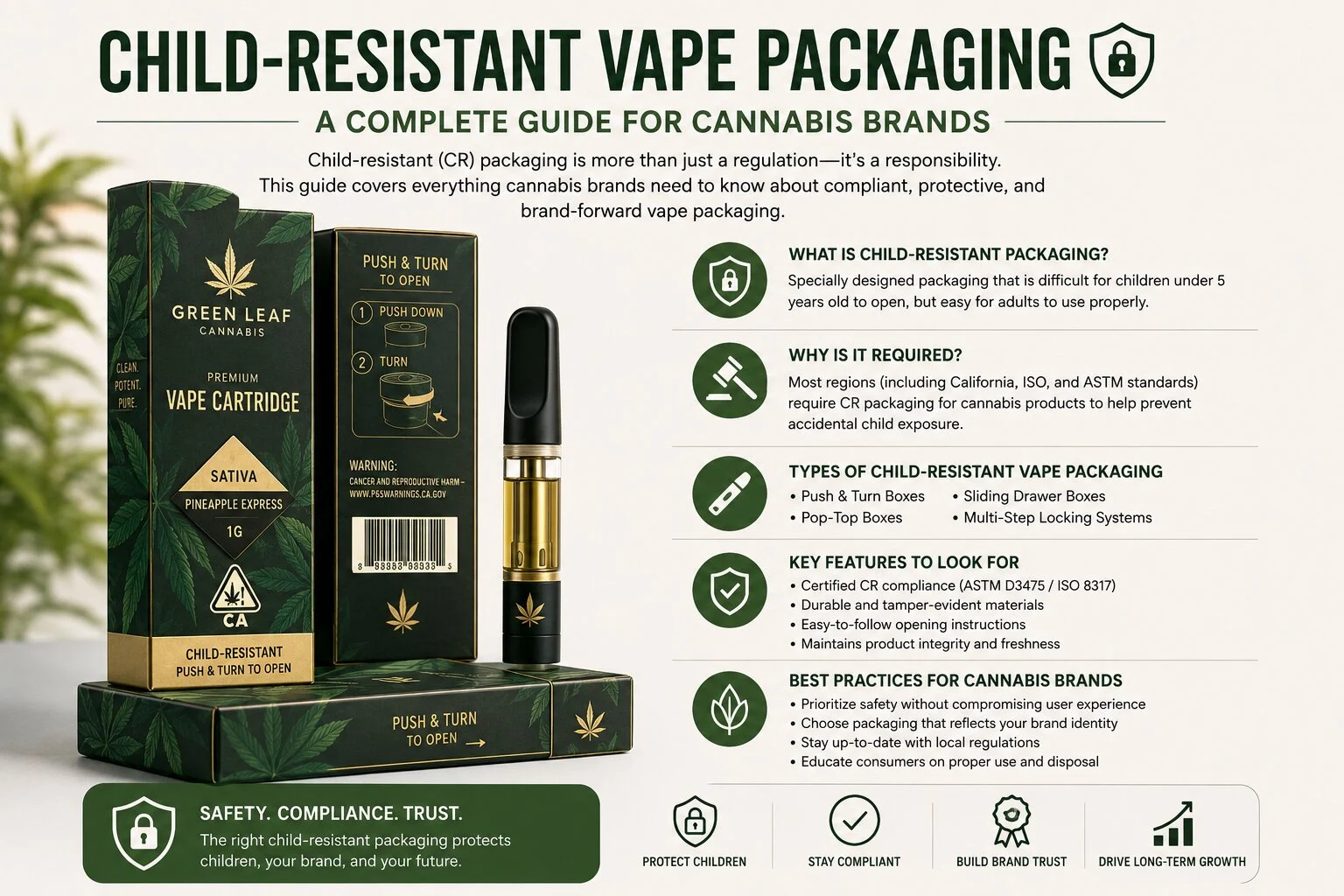
A cannabis brand spends months developing a new vape product, finalizing artwork, and preparing a retail launch. The first shipment arrives at a dispensary distribution center, only to be rejected because the packaging doesn’t meet child-resistant requirements.
The inventory can’t be stocked.
The launch gets delayed.
Retail relationships become strained.
Unfortunately, this isn’t a rare situation. Across regulated cannabis markets in the United States, child resistant vape packaging has evolved from a best practice into a mandatory requirement for many product categories.
For cannabis brands, packaging compliance isn’t just a regulatory issue. It directly affects product launches, retailer confidence, operational costs, and long-term growth.
Non-compliant packaging can lead to rejected shipments, costly redesigns, regulatory complications, and lost sales opportunities.
This guide explains what cannabis brands need to know about child-resistant packaging, how different CR mechanisms work, how requirements vary between states, and how to build compliant packaging that still looks premium on dispensary shelves.
Why Child-Resistant Packaging Is Required for Vape Products
Walk into almost any regulated cannabis market today and you’ll find one common expectation: child-resistant packaging.
The goal is straightforward. Regulators want products packaged in a way that reduces access by young children while remaining reasonably usable for adults.
Vape products receive particular attention because they are portable, compact, and often resemble everyday consumer electronics.
Requirements can vary depending on product category.
Cannabis Vape Cartridges
Cartridges are frequently packaged in compact CR folding cartons or specialty locking structures.
Disposable Vape Devices
Because disposables contain complete devices and batteries, packaging requirements may differ from cartridge formats.
Vape Pen Starter Kits
Starter kits often contain multiple components, requiring larger child-resistant structures.
CBD Vape Products
Depending on the jurisdiction and retail channel, CBD vape products may also require child-resistant packaging. Requirements vary significantly and should always be verified locally.
What Happens When Brands Skip CR Packaging?
The consequences can be expensive.
Common outcomes include:
- Retail shipment rejection
- Delayed product launches
- Regulatory penalties
- Product recalls in severe situations
- Damaged dispensary relationships
Most dispensary buyers simply won’t risk stocking products that appear non-compliant.
Because regulations vary by jurisdiction, always verify current requirements directly with applicable state regulatory authorities before production.
The Three Main Child-Resistant Mechanisms for Vape Packaging
Not all CR packaging works the same way.
The mechanism you choose should match both your product format and target market.
Push-and-Slide Systems
This is one of the most commonly used CR solutions in cannabis packaging.
How It Works
- The user presses a designated area.
- Pressure disengages the locking feature.
- The inner tray slides open.
- The product becomes accessible.
The coordinated movement makes accidental access more difficult for young children.
Best Applications
- Cartridge packaging
- Standard vape tuck boxes
- Mid-range cannabis products
Advantages
- Cost-effective
- Widely accepted
- Integrates cleanly into many box structures
- Supports attractive retail presentation
Disadvantages
Some adult consumers find repeated opening and closing slightly inconvenient.
Squeeze-and-Pull Closures
This system requires simultaneous actions before access is possible.
How It Works
- The user squeezes designated pressure points.
- While squeezing, the package is pulled open.
- Both actions must occur together.
Because two actions happen simultaneously, security performance is typically strong.
Best Applications
- Disposable vape packaging
- Larger device packaging
- Products requiring enhanced security
Advantages
- Strong child-resistant performance
- Widely tested across multiple markets
- Effective for larger packaging formats
Disadvantages
Production integration can be slightly more complex compared to simpler folding carton structures.
Locking Tab Mechanisms
Locking tabs create physical barriers that must be disengaged before access is possible.
How It Works
Integrated tabs lock portions of the package together until intentionally released by the user.
Best Applications
- Premium cartridge packaging
- Rigid vape boxes
- High-end cannabis hardware
Advantages
- Premium appearance
- Strong security characteristics
- Excellent structural integrity
Disadvantages
- Higher production costs
- Additional assembly requirements
- Slower packaging operations in some cases
Child-Resistant Testing – What Brands Need to Know
One of the biggest misconceptions in cannabis packaging is that adding a locking feature automatically creates compliant packaging.
It doesn’t.
Testing matters.
Child-resistant testing evaluates whether packaging actually performs according to recognized standards and protocols.
A package may look secure while failing formal testing requirements.
Questions to Ask Your Packaging Supplier
Before approving any structure, ask:
- Has this mechanism been CR tested?
- Which testing protocols were used?
- Are testing reports available?
- Has this structure been used in regulated cannabis markets?
A credible supplier should be prepared to answer these questions.
Why Verification Matters
Packaging compliance issues become much more expensive after production begins.
Verifying testing status early helps reduce risk and prevents costly redesigns later.
Because testing requirements can evolve, always confirm current standards with applicable regulatory authorities before launch.
How CR Requirements Vary by State
One challenge cannabis brands face is the lack of a single nationwide cannabis packaging standard.
Each state establishes its own framework.
California
California is generally considered one of the strictest cannabis packaging environments.
Child-resistant packaging is required across most cannabis product categories.
Additional labeling, opacity, and warning requirements may also apply depending on the product.
Colorado
Colorado requires child-resistant packaging and may distinguish between single-use and resealable packaging depending on product format.
Michigan, Illinois, and Nevada
Each state maintains its own compliance structure.
Requirements may differ based on:
- Product category
- Packaging format
- Retail channel
- Labeling requirements
The Multi-State Challenge
A package designed specifically for one state may not satisfy requirements elsewhere.
Brands operating across multiple jurisdictions often benefit from:
- Flexible compliance-ready layouts
- Modular labeling zones
- Adaptable CR mechanisms
- Expandable information panels
Most importantly, verify requirements directly with state regulatory bodies before approving production.
Tamper-Evident Requirements Alongside CR
Child resistance is only one part of the compliance conversation.
Many regulated markets also require tamper-evident packaging.
The two functions often work together.
Child resistance helps restrict access.
Tamper evidence helps demonstrate whether a product has been opened.
Perforated Tear Strips
A strip must be removed before opening the package.
Once broken, evidence of access remains visible.
Shrink Wrap Seals
Shrink bands create a visible protective barrier around packaging.
Opening the product destroys the seal.
Security Label Combinations
Security labels often reveal evidence of removal or tampering.
Integrated Locking Seals
Some advanced packaging structures combine CR functionality and tamper evidence within the same design.
Why Dispensaries Care
Dispensary buyers routinely evaluate tamper-evident features before approving products for shelves.
Visible security measures help build confidence throughout the supply chain.
Making CR Packaging Look Premium – Not Clinical
One of the biggest myths in cannabis packaging is that compliance automatically creates unattractive packaging.
That’s simply not true.
Many of today’s premium cannabis brands use fully compliant packaging while maintaining strong shelf appeal.
Premium Finishing Options
Child-resistant packaging can incorporate:
- Matte lamination
- Spot UV logo enhancement
- Gold foil stamping
- Silver foil stamping
- Embossing
- Full-color printing
- Textured specialty papers
Premium Design Still Works
A push-and-slide package doesn’t have to look industrial.
For example, a matte black cartridge box with spot UV branding often performs just as well visually as a luxury non-compliant package.
The difference is that the compliant version can actually be stocked by retailers.
The most successful brands design within compliance requirements rather than treating compliance as an obstacle.
Working with a Packaging Supplier on CR Requirements
Choosing the right supplier is often just as important as selecting the right mechanism.
Questions to Discuss Before Ordering
Ask:
- Which markets will the product be sold in?
- Which CR mechanism fits the product?
- Has the structure been tested?
- Can compliance panels be integrated?
- What are the minimum order quantities?
Red Flags to Watch For
Be cautious if a supplier:
- Cannot verify testing status
- Offers only one CR solution
- Doesn’t ask about target markets
- Ignores state-specific requirements
- Avoids discussing compliance documentation
Future-Proofing Your Packaging
Regulations continue to evolve.
The most adaptable packaging systems typically include:
- Expandable label areas
- Flexible layouts
- Modular compliance zones
- Adaptable child-resistant structures
This flexibility helps brands respond more efficiently when regulations change.
If your product portfolio includes multiple regulated categories, similar compliance-focused principles often apply across disposable vape packaging, pre-roll packaging, and other cannabis product formats.
Conclusion
Selecting child resistant vape packaging involves more than choosing a box style. Brands must evaluate regulatory requirements, tested CR mechanisms, tamper-evident features, retailer expectations, and future compliance flexibility.
The smartest starting point is identifying the markets where your products will be sold. Once you understand those requirements, you can select the child-resistant mechanism that best fits your product format and operational goals.
Because regulations vary significantly between states, always verify current requirements directly with applicable regulatory authorities before approving production.
Our custom vape boxes include multiple child-resistant mechanisms, compliance-ready panel layouts, and tamper-evident systems designed for cannabis and vape brands selling across US retail markets.