

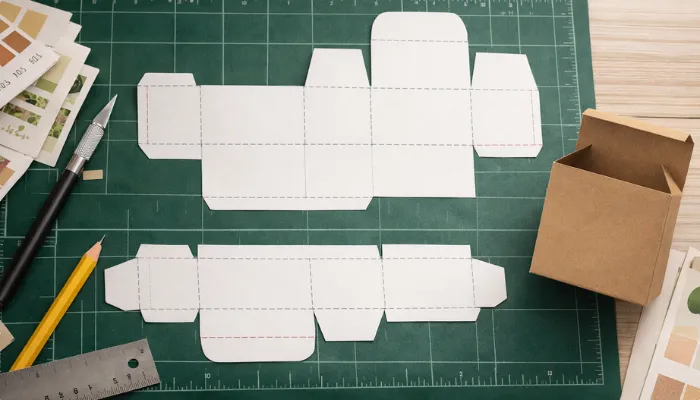
If you have ever ordered a product online or shipped something yourself, you have interacted with packaging. But have you ever thought about what goes into designing that box before it reaches you? The answer starts with a packaging dieline. Understanding the dieline not only helps you create better packaging but also directly affects how much it costs to ship a package. In this complete guide, we cover everything from what a dieline is to how to reduce your shipping costs today.
What Is a Packaging Dieline?
A packaging dieline is a flat 2D template that shows the exact shape, structure, and dimensions of a box or package before it is folded and assembled. Think of it as a blueprint every cut line, fold line, glue tab, and bleed area is mapped out with precision. Designers, manufacturers, and brand owners use dielines to plan packaging before sending it into production. A correct dieline prevents costly mistakes, reduces waste, and ensures the box fits the product perfectly.
Key Components of a Packaging Dieline
- Cut Lines — The outer edges where the material is physically cut.
- Score / Fold Lines — Dashed lines that indicate where the box will be folded.
- Glue Tabs — Flaps used to seal the box together after folding.
- Bleed Area — Extra space around edges to account for printing and cutting tolerances.
- Safe Zone — The inner area where text and logos are placed safely away from cuts.
- Die Cut Windows — Optional cutouts for product visibility or decorative purposes.
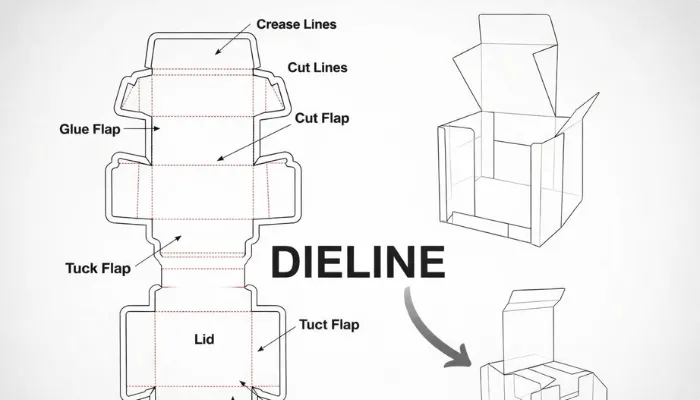
a Packaging Dieline
See our guide: where to buy cardboard boxes for shipping
Why Packaging Dielines Matter for Shipping Costs
The dimensions and material weight defined in your packaging dieline directly influence what you pay to ship. Carriers like USPS, UPS, and FedEx calculate rates based on two things: actual weight and dimensional weight (DIM weight). A poorly designed dieline that creates an oversized or overweight box can significantly increase what you pay per shipment. Optimizing your dieline means optimizing your shipping budget especially at scale.
Dimensional Weight vs. Actual Weight
Dimensional weight is calculated using the formula: (Length x Width x Height) divided by the carrier’s DIM divisor. If this number is greater than the actual weight, you are charged the dimensional weight. USPS uses a DIM divisor of 166, while UPS and FedEx use 139. This is why a compact, well-designed packaging dieline can save businesses thousands of dollars every year in carrier fees.
Packaging Dieline Elements and Their Impact on Shipping
The table below provides an informational overview of how each element of a packaging dieline connects to your overall shipping cost:
| Dieline Element | Description | Impact on Shipping Cost |
| Box Dimensions | Length x Width x Height of the flat dieline | Determines dimensional weight & carrier zone |
| Material Thickness | Cardboard, corrugated, or specialty board | Adds to actual weight; affects padding needs |
| Bleed Area | Extra edge space for cutting accuracy | Affects final box size if excess is too large |
| Score Lines | Fold lines for box assembly | Defines structural integrity; prevents damage |
| Glue Tab | Area used to seal the box edges | Affects how securely items are protected |
| Cut Lines | Outer boundary lines of the dieline | Defines box footprint and carrier size tier |
| Die Cut Window | Decorative or functional cutouts | May require extra protection inside package |
Reviewing each dieline element with shipping costs in mind helps you make smarter packaging decisions before a single box is printed.
See our guide: Discover the Cheapest Way to Ship a Box in 2026
How Much Would It Cost to Ship a Package?
One of the most frequently asked questions in e-commerce and logistics is: how much would it cost to ship a package? The answer depends on weight, dimensions, destination, carrier, and service speed. The table below compares estimated U.S. domestic shipping rates across major carriers so you can plan your fulfillment budget accurately:
Shipping Cost Comparison by Weight (U.S. Domestic Estimates)
| Package Weight | USPS Priority | UPS Ground | FedEx Ground | Est. Cost Range |
| Under 1 lb | $4.50 – $7.00 | $8.00 – $12.00 | $8.50 – $13.00 | $4.50 – $13.00 |
| 1 – 5 lbs | $7.00 – $12.00 | $10.00 – $18.00 | $10.50 – $19.00 | $7.00 – $19.00 |
| 5 – 10 lbs | $12.00 – $20.00 | $15.00 – $25.00 | $16.00 – $26.00 | $12.00 – $26.00 |
| 10 – 20 lbs | $20.00 – $35.00 | $22.00 – $38.00 | $23.00 – $40.00 | $20.00 – $40.00 |
| 20 – 70 lbs | $35.00 – $70.00 | $35.00 – $80.00 | $37.00 – $85.00 | $35.00 – $85.00 |
| Over 70 lbs | Not available | $80.00+ | $85.00+ | $80.00+ |
Prices above are estimates and may vary based on destination zone, fuel surcharges, and carrier pricing updates. Always verify on the carrier’s official website before finalizing your shipping budget.
How Much Does It Cost to Send a Package? Key Factors Explained
Understanding how much does it cost to send a package requires knowing the variables that carriers use to calculate your rate. Here are the six factors that matter most:
1. Package Weight
Heavier packages cost more. Most carriers offer rate breaks at weight thresholds like 1 lb, 5 lbs, and 10 lbs. Designing a lightweight dieline with minimal material waste directly lowers your shipping expenses.
2. Package Dimensions
A large but lightweight box may be billed at dimensional weight rather than actual weight. Compact dieline designs reduce DIM weight charges and put money back into your budget.
3. Shipping Zone
Carriers divide the U.S. into zones based on the distance from the origin point. Zone 1 is local and cheapest; Zone 8 is cross-country and most expensive. Knowing your customer locations helps you design a packaging strategy accordingly.
4. Carrier and Service Level
Standard ground shipping is the most affordable option for non-urgent deliveries. Express or overnight services can cost 3 to 5 times more. Choose your service level based on customer expectations and product type.
5. Special Handling Fees
Irregular shapes, fragile items, or packages exceeding standard size limits attract additional surcharges. A clean, standard dieline design avoids most of these extra fees automatically.
See our guide: How Much Would It Cost to Ship a Package?
6. Insurance and Declared Value
High-value products may require shipping insurance, which adds to the total cost. Sturdy packaging dielines with proper cushioning reduce the risk of damage and may lower insurance requirements.
Common Types of Packaging Dielines
Choosing the right dieline type affects both the aesthetics and the shipping efficiency of your product. Here are the most widely used styles:
Straight Tuck End (STE) Box
The most common retail box. Both top and bottom tucks fold in the same direction. Lightweight, easy to assemble, and ideal for cosmetics, pharmaceuticals, and food products.
Reverse Tuck End (RTE) Box
Similar to STE but with top and bottom tucks folding in opposite directions. Offers better structural balance and is common for electronics accessories and small consumer goods.
Mailer Box
Designed specifically for e-commerce shipping. Self-locking without tape, durable, and great for subscription boxes and direct-to-consumer brands. The go-to choice for premium unboxing experiences.
Tray and Sleeve Box
Consists of a sliding tray inside an outer sleeve. Ideal for luxury products and gift sets. Adds significant perceived value and product protection.
Gable Top Box
Features a triangular top handle. Popular for food, beverages, and gift packaging. The unique shape requires a more complex dieline but stands out strongly on retail shelves.
See our guide: Custom Cardboard Packaging Solutions for Unforgettable Brand Impressions
How to Create a Packaging Dieline Step by Step
Creating a professional packaging dieline requires the right tools and an understanding of packaging structure. Here is a simplified step-by-step process:
- Step 1 — Measure your product accurately, including length, width, and height. Add 3 to 5mm clearance on each side for easy product insertion.
- Step 2 — Select the box style that best matches your product, brand, and shipping needs.
- Step 3 — Open your design software. Adobe Illustrator and Esko ArtiosCAD are industry standards. Beginners can use Packly or Templatemaker.nl for free templates.
- Step 4 — Define all cut, score, and glue tab lines using standard color conventions (e.g., red for cuts, blue for folds).
- Step 5 — Add bleed (3mm beyond cut lines) and safe zone (5mm inside cut lines) to protect your printed artwork.
- Step 6 — Print a paper prototype, fold it, and test the fit before sending to a manufacturer.
Tips to Reduce Shipping Costs Through Better Dieline Design
Smart dieline design is one of the most overlooked ways to reduce shipping costs. Here are the top strategies used by high-volume e-commerce brands:
Right-Size Your Packaging
Build your dieline around your product, not around a generic box size. Eliminating even half an inch per dimension can reduce dimensional weight significantly when multiplied across thousands of shipments.
Choose Lighter Materials
Corrugated cardboard in E-flute or B-flute is lighter than standard C-flute while still offering solid protection for most products. Lighter material equals a lower actual weight charge.
Eliminate Unnecessary Features
Die-cut windows, specialty coatings, and complex structures add cost and sometimes weight. If a feature does not improve the customer experience or protect the product, consider removing it from the dieline.
Consolidate Shipments
Design master dielines that allow multiple units to be grouped into a single outer carton. Fewer packages mean fewer shipping fees, which directly improves your fulfillment profit margin.
(FAQs)
Q1: What software is best for creating a packaging dieline?
Adobe Illustrator is the industry standard for dieline design. Esko ArtiosCAD is preferred for structural packaging engineers. For free options, Templatemaker.nl and Packly offer ready-made dieline generators.
Q2: How much would it cost to ship a package under 1 lb?
A package under 1 lb typically costs between $4.50 and $13.00 depending on the carrier. USPS First Class Mail is the most cost-effective option for lightweight shipments within the United States.
Q3: Does my packaging dieline affect my shipping cost?
Yes, directly. The dimensions set by your dieline determine your box size, which carriers use to calculate dimensional weight. A larger box often means higher shipping fees even if the product inside is light.
Q4: How much does it cost to send a package internationally?
International shipping costs range from $15 to $80+ for standard parcels depending on destination, weight, and carrier. Express international services can exceed $100 for heavier packages. Customs duties may also apply.
Q5: Can I download a free packaging dieline template?
Yes. Websites like Templatemaker.nl, Faca Digital, and Packlane offer free downloadable dieline templates in formats like .AI, .PDF, and .DXF. Many packaging suppliers also provide free templates for standard box styles.
Q6: What is the difference between a dieline and a mockup?
A dieline is the flat technical template used for manufacturing. A mockup is a 3D rendered visual of the finished box used for client presentations and approval. Both are essential steps in the packaging workflow.
Q7: How do I calculate dimensional weight for shipping?
Use this formula: Dimensional Weight = (Length x Width x Height) divided by the DIM divisor. USPS uses 166 and UPS/FedEx use 139. If dimensional weight is higher than actual weight, that is the billable weight.