

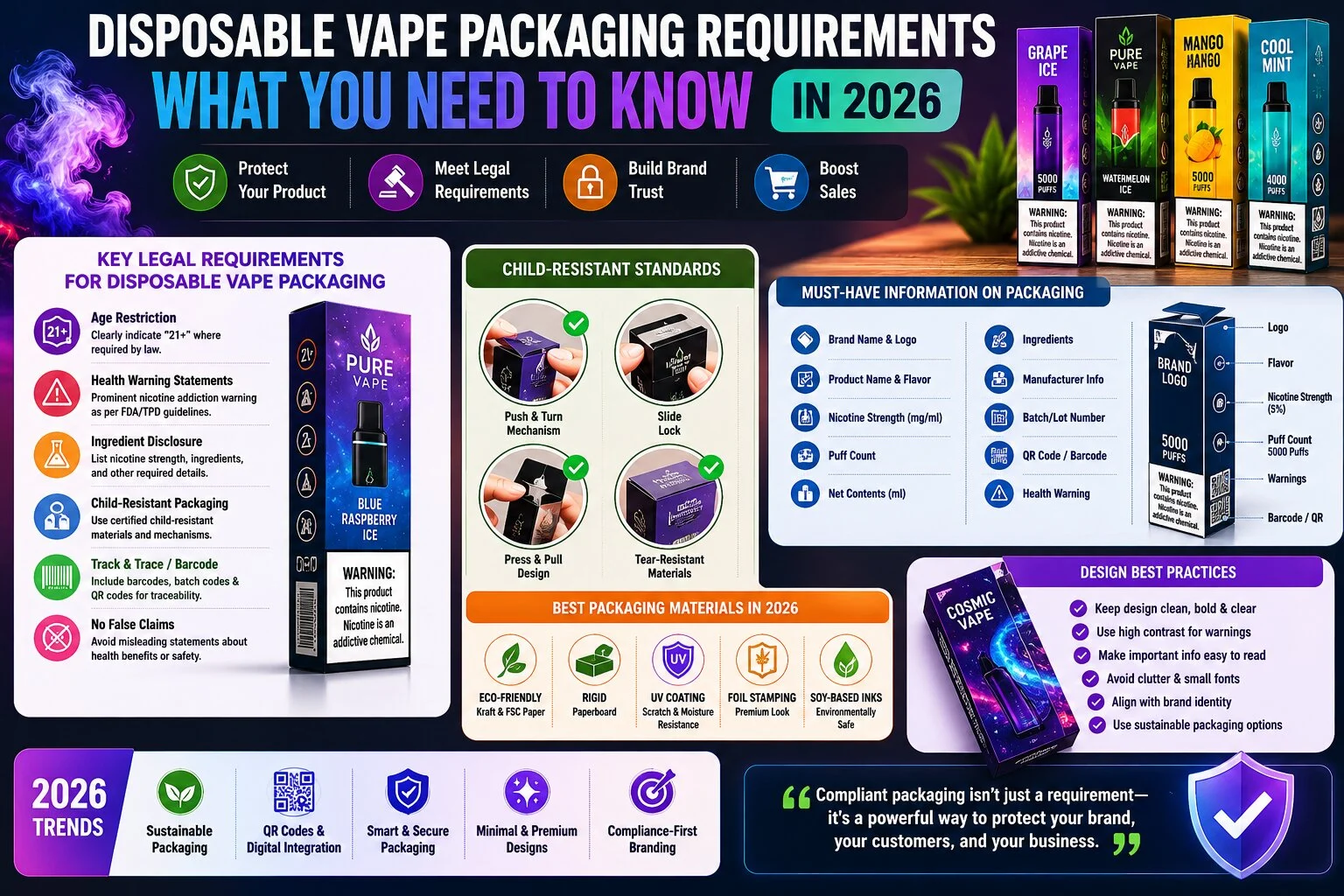
A few months after launching a new disposable vape product, a growing cannabis brand received an unpleasant surprise. A state compliance review revealed that the packaging lacked required child-resistant functionality and didn’t allocate enough space for mandatory warning language. The result? Thousands of units had to be repackaged before they could return to retail shelves.
Unfortunately, situations like this happen more often than many operators realize.
Disposable vape packaging faces stricter scrutiny than many other cannabis product categories because it combines cannabis regulations, battery-containing devices, child-resistant requirements, and extensive labeling obligations. What works for a vape cartridge package may not satisfy the requirements for a disposable device.
If you’re launching a new product or updating existing packaging, understanding compliance requirements early can save significant time, money, and operational headaches.
This guide breaks down the key elements of disposable vape packaging compliance in 2025, including child-resistant features, mandatory warning labels, tamper-evident packaging, state-by-state regulations, and practical design approaches that help brands stay compliant while maintaining strong shelf appeal and brand identity.
Why Disposable Vape Packaging Has Different Requirements
Many new operators assume disposable devices can use the same packaging approach as vape cartridges. In practice, regulators often evaluate them differently.
Disposable devices are larger products that contain integrated batteries and complete vaping systems rather than individual components. Because of this, regulators frequently require additional disclosures, safety information, and packaging considerations.
Another factor is available surface area.
Since disposable vape boxes typically offer larger packaging panels, regulators expect manufacturers to dedicate sufficient space to required warnings, product disclosures, symbols, and compliance information.
Warning language alone can occupy a significant portion of the package design.
Tamper-evident expectations may also be more stringent depending on the state and product category. In many regulated markets, retailers expect packaging to clearly demonstrate whether a product has been opened or altered before purchase.
Child-resistant packaging requirements can differ as well. Some mechanisms suitable for cartridges may not be appropriate for larger disposable devices.
For these reasons, disposable vape packaging should always be developed as its own compliance project rather than adapted from another product line.
Child-Resistant Requirements for Disposable Vape Packaging
Walk into almost any regulated cannabis market in the United States and you’ll find one consistent expectation: child-resistant packaging.
Most state cannabis programs require child-resistant (CR) packaging designed to reduce the likelihood of access by young children while remaining usable for adults.
Several CR approaches are commonly used for disposable vape packaging.
Squeeze-and-Pull Systems
This design requires users to squeeze designated areas while simultaneously pulling open the package.
Because two coordinated actions are required, the package becomes more difficult for young children to access.
Many disposable vape brands use this structure because it balances security with consumer convenience.
Push-and-Slide Structures
Push-and-slide mechanisms require pressure to be applied to a specific area before the package can open.
These systems are commonly used for premium cannabis packaging where both compliance and presentation matter.
Locking Tab Mechanisms
Locking tabs create an additional physical barrier by requiring users to disengage a closure before opening the package.
These structures can be incorporated into folding cartons and specialty disposable vape boxes.
Choosing the Right CR Mechanism
The best option depends on several factors:
- Device dimensions
- Retail channel requirements
- State regulations
- Manufacturing budget
- Consumer experience goals
Packaging suppliers should be able to explain which systems have undergone child-resistance testing and which are most appropriate for your specific product.
Testing Requirements
Child-resistant packaging is typically evaluated through recognized testing protocols. Exact standards and accepted certifications may vary depending on jurisdiction.
Because regulations evolve, always verify current requirements with the applicable state regulatory authority before finalizing packaging specifications.
Warning Label Requirements and Panel Space
One of the most overlooked packaging mistakes is failing to reserve enough room for compliance information.
Brand owners often start by focusing on logos, product imagery, and color schemes. However, compliance requirements usually come in later and end up taking over a significant portion of the available design space.
For disposable vape packaging requirements, planning compliance panels early is essential.
Most regulated cannabis markets require some combination of:
- State-specific cannabis warnings
- Universal cannabis symbols
- Product identification
- Ingredient disclosures
- Batch information
- Manufacturing details
- Testing references
- Age restriction language
For nicotine-based disposable products, nicotine disclosure requirements may also apply depending on product category and jurisdiction.
California Considerations
California is often viewed as one of the most demanding packaging environments in the country.
In addition to cannabis-specific requirements, some products may also require Proposition 65 warnings depending on product composition and regulatory interpretation.
Because California regulations are frequently updated, businesses should always review current guidance from the appropriate regulatory agencies before production.
Designing Around Compliance
The smartest packaging projects allocate compliance space from the beginning.
Instead of treating warnings as an afterthought, successful brands create dedicated compliance zones within the layout.
This approach reduces redesign costs and minimizes the risk of costly reprints later.
Tamper-Evident Requirements
Retail buyers often examine tamper-evident features before they review branding.
That’s because tamper evidence serves an important purpose throughout the supply chain.
A tamper-evident package provides visible signs if a product has been opened, altered, or accessed before reaching the consumer.
Several systems are commonly used for disposable vape boxes.
Perforated Tear Strips
A tear strip must be broken before the package can be opened.
Once removed, the package clearly indicates prior access.
Shrink Wrap Seals
Shrink bands or shrink wrapping create a visible barrier around the package.
Any attempt to open the product disrupts the seal.
Security Label Systems
Security labels are designed to show evidence of tampering when removed.
Many premium products combine security labels with other tamper-evident measures.
Locking Closure Mechanisms
Some child-resistant systems also provide tamper-evident functionality when properly designed.
Why Retailers Care
Dispensaries and vape retailers want confidence that products arriving on shelves remain secure throughout distribution.
Packaging lacking obvious tamper-evident features may face additional scrutiny or require corrective action depending on market requirements.
Including tamper-evident functionality early in the packaging development process helps avoid operational challenges later.
State-by-State Packaging Variation – What to Know
One of the biggest compliance challenges is that there is no single national packaging standard covering all regulated cannabis products.
Requirements can vary significantly between jurisdictions.
California
California generally maintains some of the most comprehensive packaging requirements in the cannabis industry.
Warning language, symbol placement, labeling content, and child-resistant expectations are closely regulated.
Colorado
Colorado also enforces strict packaging standards but may differ in specific labeling requirements, symbol usage, and compliance implementation.
Federal Considerations
While cannabis regulations are mainly governed at the state level, businesses still need to consider relevant federal rules that may apply to packaging materials, transportation, labeling, and broader consumer product safety standards.
Multi-State Challenges
A package designed exclusively for one state may not satisfy requirements elsewhere.
This becomes particularly problematic for brands expanding into multiple markets.
One common solution is creating flexible compliance-ready packaging that includes:
- Expandable information panels
- Variable label areas
- State-specific sticker zones
- Modular compliance layouts
Most importantly, always verify current requirements directly with the appropriate state regulatory bodies before launching products into any market.
Regulations change regularly, and compliance expectations can evolve over time.
How to Balance Compliance with Strong Brand Design
Some brand owners assume compliance automatically leads to unattractive packaging.
In reality, many of the most successful disposable vape brands build compliance directly into their visual strategy.
The key principle is simple:
Compliance first. Branding second.
When compliance requirements are integrated early, the design process becomes much easier.
Create Dedicated Compliance Zones
Separate branding panels from compliance panels.
This prevents mandatory information from competing with product messaging.
Use Color Blocking
Many premium brands use distinct color zones for regulatory content.
This keeps warning information organized while preserving visual appeal.
Consider Matte Finishes
Matte coatings work particularly well for compliance-heavy packaging because printed labels remain highly readable and professional.
Many premium cannabis brands use matte finishes for this reason.
Maintain Visual Consistency
Even with extensive compliance language, brands can still preserve:
- Logo recognition
- Color identity
- Product hierarchy
- Premium positioning
The strongest packaging systems treat compliance as part of the design rather than an obstacle to overcome.
If your product portfolio includes adjacent regulated categories, such as CBD products, applying similar compliance-forward design principles across both disposable vape packaging and CBD packaging can improve brand consistency.
How to Avoid Expensive Repackaging Later
Most costly packaging corrections can be traced back to a handful of common mistakes.
1. Not Leaving Enough Label Panel Space
This is perhaps the most frequent issue.
Warning language expands, state requirements change, and suddenly the package no longer accommodates mandatory information.
2. Using Non-CR Closures in CR-Required Markets
Brands sometimes assume basic packaging structures will satisfy compliance standards.
In many jurisdictions, that assumption proves costly.
3. Missing Tamper-Evident Requirements
Tamper evidence is often overlooked during early packaging development.
Adding it later typically increases costs and production complexity.
Build Adaptability Into Your Packaging System
Regulations continue to evolve.
Compliance-ready packaging systems help brands adapt through:
- Flexible layouts
- Expandable panels
- Variable labeling zones
- Multiple closure options
- Modular compliance elements
In many cases, investing in adaptable packaging provides better long-term value than selecting the lowest-cost option available.
The cheapest package today can become the most expensive package tomorrow if regulations change.
Conclusion
Successful disposable vape packaging brings together several essential elements, including child-resistant features, clear space for mandatory warning labels, tamper-evident protection, and adaptability for different state compliance requirements.
Because regulations differ across regions, there is no one-size-fits-all packaging solution. The most effective approach is to consider compliance from the very beginning of the design process, rather than trying to adjust packaging after it has already been developed.
Before launching any product, verify current requirements directly with applicable state regulatory resources and confirm that your packaging supplier understands the markets where your products will be sold.
Our custom vape boxes include compliance-ready panel layouts, child-resistant options, and tamper-evident systems designed for US vape retail, helping brands create packaging that supports both regulatory requirements and strong shelf presentation.