
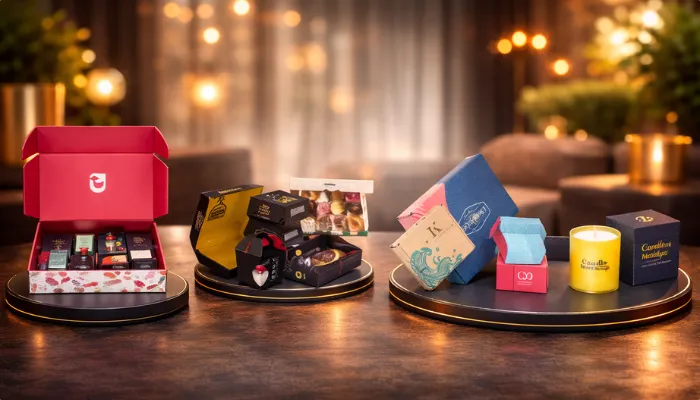
Retail packaging is more than just a box or a bag it is the first impression your product makes on a potential customer. In a competitive retail environment, the way you package your product can be the difference between a sale and a missed opportunity. In this guide, you will learn exactly how to improve retail packaging to attract more customers, reduce costs, and build a stronger brand identity. Whether you are a small business or an established brand, these strategies will help you stay ahead.
Understand What “Improving Retail Packaging” Really Means
Before you redesign anything, you need to understand the full scope of what retail packaging improvement involves. It is not just about making something look pretty it is about solving real business and customer problems. Improving retail packaging means making your product easier to sell, easier to use, and easier to remember. It includes design, materials, messaging, functionality, and sustainability all working together Start by auditing your current packaging. Ask yourself: Does it stand out on the shelf? Does it clearly explain what the product is? Does it reflect your brand values? The answers will guide your improvement strategy.
Focus on Shelf Visibility and First Impressions
The average shopper decides whether to pick up a product in just 3 to 5 seconds. That means your packaging has a very short window to grab attention and create a positive first impression. Use bold colors, clear fonts, and a strong focal point on your packaging design. Avoid cluttered layouts that confuse the eye. The simpler and more striking your design, the better it will perform on crowded retail shelves. Consider how your packaging looks from a distance of 5 feet. If it blends into the background, it needs more contrast, a stronger color palette, or a more distinctive shape. Shelf visibility is one of the fastest ways to improve retail packaging results.
3. Use Color Psychology to Influence Buying Decisions
Colors are one of the most powerful tools in retail packaging. Different colors trigger different emotions, and smart brands use this to their advantage. Blue builds trust, red creates urgency, green signals health or sustainability, and gold conveys luxury. Choose a color palette that matches both your brand identity and your target audience’s expectations. A children’s toy brand might use bright, playful colors, while a premium skincare brand might lean toward minimalist whites and golds. Consistency in color across your product line also helps customers quickly identify your brand on the shelf, which improves recall and drives repeat purchases.
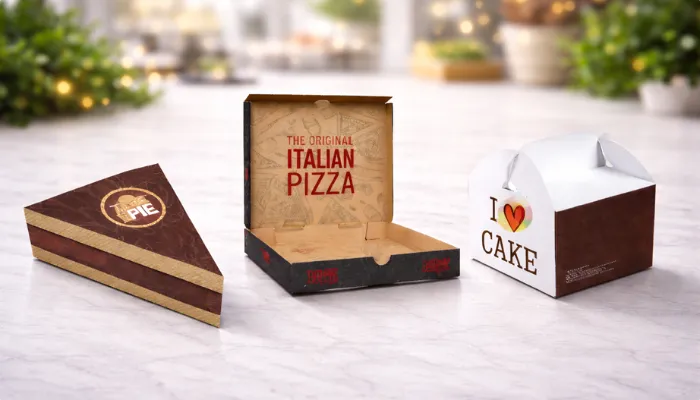
Custom Bakery Boxes
See our guide: Custom Bakery Boxes Wholesale in USA
4. Improve Typography and Readability
Many retail brands underestimate the power of typography. Your font choices communicate your brand personality before a customer reads a single word. A sleek sans-serif font says modern and clean, while a classic serif font can feel premium and established. Make sure the most important information your product name, key benefit, and call to action is easy to read from a normal shopping distance. Avoid using more than two or three font styles on a single package. Hierarchy matters too. Guide the reader’s eye from the product name to the key benefit to the supporting information in a logical flow. Good typography can significantly improve retail packaging performance in-store and online.
5. Optimize Packaging Structure and Functionality
Great packaging is not only visually appealing it is also functional. Customers appreciate packaging that is easy to open, resealable if needed, and protective of the product inside. Poor functionality leads to frustration and returns. Consider the unboxing experience as well. With the rise of social media and unboxing videos, how your package opens and reveals the product can become a marketing moment in itself. Also think about stackability, storage, and portability from both the retailer’s and the customer’s perspective. Packaging that takes up less shelf space or is easier to carry often gets better placement and higher sales.
6. Choose the Right Packaging Materials
The materials you choose affect cost, sustainability, protection, and perceived quality. Cardboard, corrugated board, glass, plastic, biodegradable materials each has its pros and cons depending on your product type and brand positioning. Lightweight materials reduce shipping costs, while premium materials like matte laminate or soft-touch coatings elevate the perceived value of your product. Match your material choice to what your target customer expects and values. Always test your packaging materials for durability during shipping and handling. A damaged product due to poor packaging is worse than no sale at all it creates a negative brand experience that customers remember.
See our guide: Custom Vape Boxes: Branded Vape Packaging That Sells
7. Embrace Sustainable Packaging to Win Modern Consumers
Sustainability is no longer optional it is a competitive advantage. Studies consistently show that a growing percentage of consumers prefer to buy from brands that use eco-friendly packaging. Improving retail packaging today means thinking about environmental impact. Switch to recyclable, compostable, or reusable materials wherever possible. Reduce excess packaging and unnecessary plastic. Clearly communicate your sustainability commitment on the package itself. Sustainable packaging can also reduce long-term costs by using less material and streamlining production. It is a win for your brand, your customers, and the planet making it one of the smartest ways to improve retail packaging.
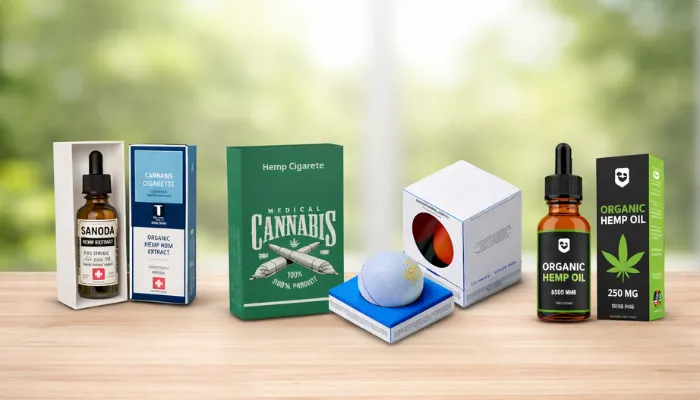
custom CBD oil boxes
See our guide: Custom CBD Oil Boxes Wholesale in USA
8. Communicate Your Brand Story and Key Benefits Clearly
Customers want to know what makes your product special before they buy it. Your packaging is your silent salesperson it needs to communicate your brand story, key benefits, and unique selling points clearly and quickly. Use the front of the package to make the biggest claim or show the strongest visual. Use the sides and back to provide supporting information, ingredients, usage instructions, and brand story. Every inch of space should work for you. Avoid generic messaging. Instead of “High Quality,” say “Made with Cold-Pressed Organic Ingredients” or “30% More Durable Than Standard Alternatives.” Specific, credible claims build confidence and drive purchase decisions.
9. Design for Both In-Store and E-Commerce Packaging
Today, your packaging needs to perform in two very different environments: the physical retail shelf and the online product listing. In-store, it competes for visual attention. Online, it needs to photograph well and look good in thumbnail images. For e-commerce, consider how your packaging looks when opened. The inside of the box matters just as much as the outside. Use branded tissue paper, inserts, thank-you cards, or custom tape to create a memorable unboxing experience. If you sell both in-store and online, design packaging that works equally well in both contexts. Consistent branding across channels strengthens recognition and trust with your customers.
10. Test, Gather Feedback, and Iterate
Improving retail packaging is not a one-time project it is an ongoing process. The best brands regularly test new packaging concepts, gather customer feedback, and refine their approach based on real data. Run A/B tests with different packaging designs in limited markets before rolling out broadly. Use surveys, focus groups, or social media polls to understand what resonates with your audience. Monitor sales data before and after packaging changes to measure impact. Small, incremental improvements over time can lead to dramatic results. Do not wait for a full rebrand to start improving even minor tweaks to color, copy, or structure can boost your shelf conversion rate significantly.
Retail Packaging Improvement Comparison Table
| Packaging Element | Before Improvement | After Improvement | Expected Result |
| Visual Design | Generic colors, cluttered layout | Bold colors, clean hierarchy | Up to 30% more shelf pick-ups |
| Messaging | Vague claims (“High Quality”) | Specific benefit claims | Stronger purchase intent |
| Material | Standard plastic or cardboard | Eco-friendly, premium finish | Improved brand perception |
| Size/Shape | Oversized, wasteful | Right-sized, compact | Lower shipping costs |
| Typography | Multiple fonts, small text | 2 fonts, readable hierarchy | Faster decision-making |
| Sustainability | No eco mention | Recyclable + labeled | Appeal to eco buyers |
| Product Info | Hidden or missing details | Clear, front-facing benefits | Fewer returns |
| Unboxing | Plain brown box | Branded interior, inserts | Social sharing + loyalty |
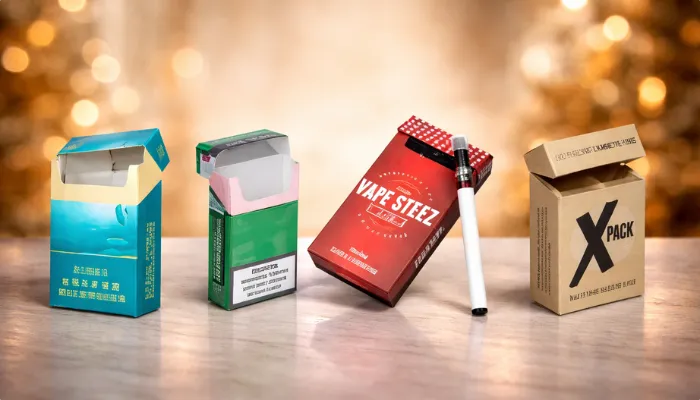
Custom cigarette boxes
See our guide: Custom Vape Boxes: Branded Vape Packaging That Sells
Advanced Tips to Further Improve Retail Packaging
Use Limited Edition or Seasonal Packaging
Limited edition packaging creates urgency and excitement around your product. Seasonal designs around holidays, major events, or special milestones encourage customers to buy now before the packaging changes. This strategy works especially well for gifting products, food and beverage brands, and lifestyle products. Even a small color or graphic change can revitalize interest in a product without requiring a full redesign.
Leverage Packaging as a Marketing Channel
Your packaging can include QR codes, social media handles, hashtags, or website URLs to drive further engagement. Every package that leaves your facility is a marketing touchpoint use it wisely. Encourage customers to share their unboxing experience by including a friendly note or CTA on the inside of the box. User-generated content is free marketing that builds social proof and brand credibility.
Right-Size Your Packaging to Cut Costs
Oversized packaging wastes materials, increases shipping costs, and frustrates customers. Right-sizing means designing packaging that fits your product as closely as possible without sacrificing protection. Conduct a packaging audit to identify SKUs where you can reduce box or bag size. Even small reductions multiplied across thousands of shipments can result in significant cost savings and a smaller environmental footprint.
Invest in Professional Packaging Design
DIY packaging can work for very early-stage brands, but if you want to improve retail packaging to a competitive level, investing in a professional packaging designer is worth every dollar. A professional designer understands print specifications, dieline templates, color profiles for different printing methods, and how to create designs that look just as good in person as they do on screen.
(FAQs)
Q1: Why is it important to improve retail packaging?
Retail packaging is the first physical touchpoint between your brand and your customer. Improving it directly impacts shelf conversion rates, brand perception, customer satisfaction, and repeat purchase behavior. It is one of the highest-ROI investments a product brand can make.
Q2: How much does it cost to redesign retail packaging?
Costs vary widely depending on complexity. A basic packaging redesign by a freelance designer can cost between $500 and $2,000. A full agency-led rebrand with new dielines, materials testing, and print production can run $10,000 or more. The key is to set a budget that matches your sales volume and expected return.
Q3: What is the most important element of retail packaging?
While all elements matter, shelf visibility and clarity of message are the most critical. If your packaging does not get picked up, nothing else matters. Design for attention first, then communicate your value proposition clearly and quickly once you have it.
Q4: How can small businesses improve retail packaging on a budget?
Small businesses can start by improving packaging copy and layout without changing materials. Using free design tools, purchasing better quality labels, or switching to a more distinctive color scheme are low-cost improvements that can have a big impact.
Q5: Does sustainable packaging really influence buying decisions?
Yes consumer research consistently shows that a significant portion of shoppers, especially younger demographics, prefer and actively choose products with sustainable packaging. It builds trust, improves brand image, and can justify a slight price premium.
Q6: How do I test if my new packaging is performing better?
Track sales data before and after the packaging change in similar retail environments. You can also conduct consumer surveys, monitor online reviews and social media comments, and measure return rates. A/B testing with two packaging versions in comparable stores is the most controlled approach.
Q7: Should e-commerce and retail store packaging be the same?
Not necessarily. Retail store packaging needs to win on the shelf strong visual design and quick messaging matter most. E-commerce packaging needs to protect the product in transit and create a positive unboxing experience. Ideally, align them visually for brand consistency while optimizing each for its channel.
Conclusion: Start Improving Your Retail Packaging Today
Retail packaging is one of the most impactful levers you can pull to grow your business. From the materials you choose to the colors you use and the story you tell, every decision influences how customers perceive and buy your product. The good news is that you do not need a massive budget to start seeing improvements. Focus on the highest-impact changes first shelf visibility, clear messaging, and better materials and build from there. By consistently working to improve retail packaging, you build a stronger brand, earn more loyal customers, and create a product experience that stands out in any retail environment. The brands that win on shelves today are the ones that treat packaging as a strategic asset, not just a container.