

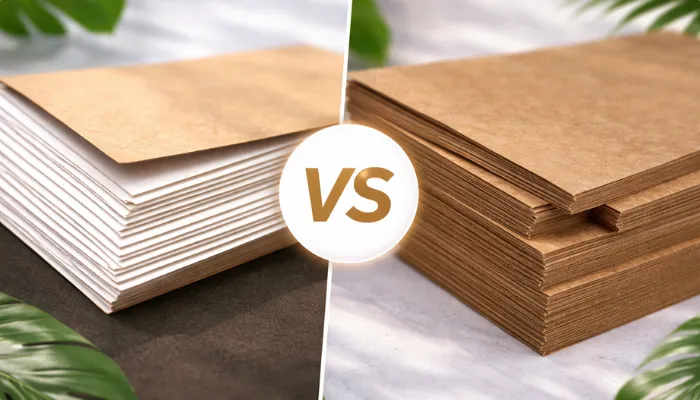
When choosing packaging materials for your business or personal needs, the kraft paper vs cardboard debate often tops the list. Both materials offer unique advantages, but understanding their differences can save you money and ensure your products arrive safely. In this comprehensive guide, we’ll break down everything you need to know to make the right choice.
What Is Kraft Paper?
Kraft paper is a durable paper made from wood pulp through the kraft process, which uses chemical pulp to create strong fibers. This manufacturing method produces a material known for its natural brown color and exceptional tear resistance. It’s commonly used for shopping bags, wrapping paper, and lightweight packaging applications. The word “kraft” means “strength” in German, which perfectly describes this material’s key characteristic. Unlike regular paper, kraft paper maintains its integrity even when exposed to minor moisture or stress.
What Is Cardboard?
Cardboard is a thicker, more rigid material typically made from multiple layers of paper pulp pressed together. It comes in various forms, including corrugated cardboard (with a wavy middle layer) and paperboard (solid layers). Cardboard provides superior structural support and is the go-to choice for shipping boxes, product displays, and heavy-duty packaging. The thickness and layered construction of cardboard make it ideal for protecting goods during transportation. Its versatility allows manufacturers to create everything from simple boxes to complex custom packaging solutions.
Kraft Paper vs Cardboard
| Feature | Kraft Paper | Cardboard |
|---|---|---|
| Thickness | 50-150 GSM | 200-1000+ GSM |
| Strength | Moderate (tear-resistant) | High (crush-resistant) |
| Cost | $0.05-$0.20 per sq ft | $0.15-$0.50 per sq ft |
| Weight | Lightweight | Medium to Heavy |
| Flexibility | Highly flexible | Rigid/semi-rigid |
| Water Resistance | Low | Low to Moderate |
| Recyclability | 100% recyclable | 100% recyclable |
| Best Uses | Wrapping, bags, void fill | Shipping boxes, displays |
| Eco-Friendliness | Excellent (biodegradable) | Excellent (biodegradable) |
| Print Quality | Good | Excellent |
| Cushioning | Minimal | Good (corrugated) |
| Storage Space | Minimal (rolls flat) | More space (rigid) |

Corrugated vs Cardboard Cost
Strength and Durability Analysis
When comparing kraft paper vs cardboard in terms of strength, cardboard clearly wins for heavy-duty applications. Cardboard can support substantial weight and resist crushing forces, making it essential for shipping electronics, glassware, and other fragile items. Its multi-layer construction provides structural integrity that kraft paper simply cannot match. However, kraft paper excels in tear resistance and flexibility. It can bend and conform to irregular shapes without breaking, making it perfect for wrapping odd-sized items or creating flexible packaging solutions. For applications requiring tensile strength rather than compressive strength, kraft paper is often the superior choice.
See our guide: Corrugated vs Cardboard Cost: Which Packaging Saves You More Money?
Cost Comparison: Which Is More Economical?
Price is a crucial factor in the kraft paper vs cardboard decision. Generally, kraft paper costs 60-70% less than cardboard per square foot, making it an attractive option for businesses watching their packaging budget. For high-volume operations that don’t require rigid protection, kraft paper can significantly reduce material costs. Cardboard’s higher price reflects its superior protective qualities and versatility. While more expensive upfront, cardboard can reduce product damage during shipping, potentially saving money on replacements and customer service issues. The cost-benefit analysis depends on your specific use case and product value.
Environmental Impact: Sustainability Showdown
Both materials score well in the kraft paper vs cardboard sustainability comparison. Kraft paper is made from renewable wood resources and is 100% biodegradable and recyclable. It decomposes quickly in natural environments and requires less energy to produce than many synthetic alternatives. Cardboard shares similar eco-friendly credentials, being fully recyclable and biodegradable. Corrugated cardboard can be recycled up to 7 times before the fibers become too short to use. Both materials contribute to the circular economy and are excellent choices for environmentally conscious businesses in the USA and worldwide.
Best Use Cases for Kraft Paper
Kraft paper shines in applications where flexibility and light protection are needed. E-commerce businesses frequently use kraft paper for void fill, protecting products inside boxes without adding excessive weight. It’s also ideal for wrapping individual items, creating shopping bags, and producing mailers for clothing and soft goods. The material works exceptionally well for branding purposes, as its natural appearance appeals to eco-conscious consumers. Many artisan brands and organic product companies choose kraft paper to align with their sustainable image. It’s also cost-effective for businesses shipping lightweight items in high volumes.
Best Use Cases for Cardboard
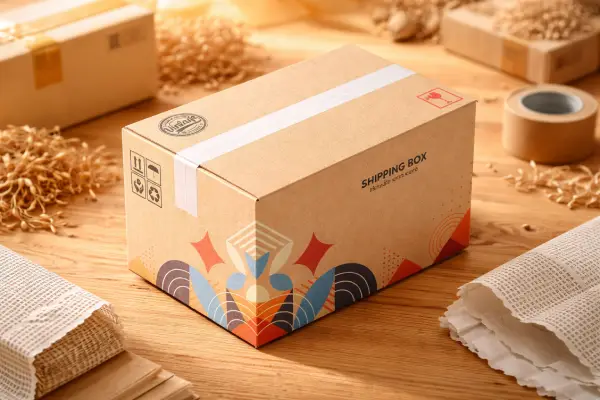
Cardboard dominates when structural protection is paramount. Shipping boxes made from corrugated cardboard are the industry standard for transporting goods across the country and internationally. The material’s rigidity prevents crushing, while the corrugated layers provide cushioning against impacts. Beyond shipping, cardboard excels in retail displays, product packaging, and storage solutions. Custom printed cardboard boxes enhance brand presentation while protecting products on store shelves. For USA businesses shipping fragile, heavy, or high-value items, cardboard is typically the only viable option.
Weight Considerations for Shipping
In the kraft paper vs cardboard debate, weight plays a significant role in shipping costs. Kraft paper adds minimal weight to packages, which can result in lower shipping fees, especially for bulk shipments. This makes it attractive for businesses operating on thin margins or shipping lightweight products internationally. Cardboard’s added weight increases shipping costs but provides essential protection that can prevent costly damage claims. For many businesses, the trade-off between slightly higher shipping costs and reduced product damage makes cardboard the smarter choice. Dimensional weight pricing also affects this calculation, favoring compact, well-protected packages.
See our guide: where to buy cardboard boxes for shipping
Moisture and Weather Resistance
Neither material performs exceptionally well in wet conditions, but there are differences. Standard kraft paper absorbs moisture quickly, losing strength when wet. However, waxed or coated kraft paper varieties offer improved water resistance for specific applications like food packaging or outdoor use. Cardboard, especially corrugated varieties, can withstand brief moisture exposure better than kraft paper due to its thickness. The air gaps in corrugated cardboard slow water absorption. Still, prolonged exposure compromises structural integrity. For shipments in humid climates or during rainy seasons, additional moisture barriers may be necessary for both materials.
Customization and Printing Options
Both materials accept printing well, but cardboard generally provides a better surface for high-quality graphics and branding. Its smooth outer layer (liner) allows for sharp text, vibrant colors, and detailed images. Many businesses create custom branded boxes using offset, flexographic, or digital printing techniques. Kraft paper’s natural texture and brown color create limitations for certain designs but offer a rustic, eco-friendly aesthetic that resonates with many consumers. Simple designs, stamps, and labels often work better than complex full-color printing. The kraft paper vs cardboard choice for branding depends on your desired aesthetic and marketing goals.

Kraft Boxes With Lids
Storage and Handling Efficiency
Kraft paper offers significant advantages in storage efficiency. It comes in rolls or flat sheets that take up minimal warehouse space. Businesses can stock large quantities without dedicating substantial floor space to packaging materials. It’s also easier to handle, requiring less physical effort to transport around a facility. Cardboard boxes, especially corrugated ones, consume more storage space due to their rigid structure. Even flat-packed boxes require more room than equivalent amounts of kraft paper. However, many businesses find this trade-off acceptable given cardboard’s superior protective qualities and versatility in creating various box sizes and styles.
Making the Right Choice for Your Business
The kraft paper vs cardboard decision ultimately depends on your specific needs, budget, and product characteristics. Consider these factors: product fragility, shipping distance, brand image, volume, and cost constraints. Many successful businesses use both materials strategically—cardboard for outer shipping boxes and kraft paper for internal protection and wrapping. Testing both materials with your actual products is the best way to determine which performs better. Monitor damage rates, customer feedback, and total cost of ownership (including material, labor, and damage costs). The USA packaging market offers numerous suppliers for both materials, making it easy to experiment and optimize your packaging strategy.
See our guide: Discover the Cheapest Way to Ship a Box in 2026
Material Properties Table
| Property | Kraft Paper | Cardboard | Winner |
|---|---|---|---|
| Tensile Strength | High | Moderate | Kraft Paper |
| Compressive Strength | Low | High | Cardboard |
| Tear Resistance | Excellent | Good | Kraft Paper |
| Puncture Resistance | Moderate | High | Cardboard |
| Flexibility | Excellent | Low | Kraft Paper |
| Stacking Strength | Poor | Excellent | Cardboard |
| Conformability | Excellent | Poor | Kraft Paper |
| Edge Crush Strength | N/A | High | Cardboard |
Industry Applications Across the USA
In the USA, both kraft paper and cardboard serve critical roles across diverse industries. E-commerce giants use billions of square feet of cardboard annually for shipping boxes, while kraft paper dominates the grocery bag and food wrap markets. The fashion industry increasingly adopts kraft paper mailers as an eco-friendly alternative to plastic poly mailers. Manufacturing and warehousing operations rely heavily on cardboard for palletizing, storage, and inter-facility shipments. Meanwhile, retail stores use kraft paper for shopping bags, gift wrapping, and customer-friendly packaging experiences. Understanding these industry-specific applications can help businesses align their choices with market standards and customer expectations.
Custom Shipping Boxes
See our guide: How Much Would It Cost to Ship a Package?
Future Trends in Packaging Materials
The kraft paper vs cardboard landscape continues evolving as sustainability becomes increasingly important to consumers and businesses alike. Innovations in coating technologies are improving moisture resistance for both materials without compromising recyclability. Biodegradable alternatives to plastic tape and adhesives are making these natural materials even more eco-friendly. In the USA market, consumer preference for sustainable packaging is driving businesses toward paper-based solutions. Both kraft paper and cardboard benefit from this trend, with manufacturers investing in improved strength-to-weight ratios and enhanced recyclability. The future likely involves more sophisticated hybrid solutions that combine the best properties of both materials.
(FAQs)
Is kraft paper stronger than cardboard?
No, cardboard is generally stronger than kraft paper in terms of compressive and structural strength. However, kraft paper has superior tear resistance and flexibility. The “stronger” material depends on your specific application cardboard for rigid protection, kraft paper for flexible, tear-resistant wrapping.
Can kraft paper replace cardboard for shipping?
Kraft paper can replace cardboard only for lightweight, non-fragile items that don’t require structural protection. Padded kraft paper mailers work well for clothing, textiles, and documents. For most products requiring crush protection or stacking strength, cardboard remains necessary for safe shipping.
Which is more eco-friendly: kraft paper or cardboard?
Both kraft paper and cardboard are highly eco-friendly, being 100% recyclable and biodegradable. Kraft paper requires slightly less energy to produce and transports more efficiently due to lower weight. However, the environmental difference is minimal—both are excellent sustainable choices compared to plastic alternatives.
What’s the cost difference between kraft paper and cardboard?
Kraft paper typically costs 60-70% less than cardboard per square foot. However, total packaging costs depend on your specific needs. While kraft paper has lower material costs, some applications require cardboard’s protective properties to prevent product damage, which could be more expensive than the material savings.
Is corrugated cardboard better than kraft paper?
Corrugated cardboard is better for applications requiring structural support, cushioning, and protection during shipping. Kraft paper is better for lightweight wrapping, void fill, and flexible packaging needs. Neither is universally “better”—the right choice depends on your product’s protection requirements and packaging goals.
Can kraft paper and cardboard be used together?
Yes, using kraft paper and cardboard together is a common and effective strategy. Many businesses use corrugated cardboard boxes for outer protection and kraft paper for internal wrapping, void fill, or product separation. This combination optimizes protection while managing costs and maintaining eco-friendly practices.
How do I choose between kraft paper and cardboard?
Choose based on these factors: product fragility (cardboard for fragile items), weight (kraft paper for lightweight), cost constraints (kraft paper is cheaper), shipping distance (cardboard for long distances), and brand image (kraft paper for eco-conscious branding). Test both materials with your products to determine which provides adequate protection at the best value.
Are kraft paper and cardboard recyclable in the USA?
Yes, both kraft paper and cardboard are widely recyclable throughout the USA. Most curbside recycling programs accept both materials. Kraft paper and cardboard can be recycled at paper mills and converted into new paper products. Ensure materials are clean and dry for best recycling results, and remove any non-paper elements like plastic tape when possible.
Conclusion
Understanding the kraft paper vs cardboard comparison empowers you to make informed packaging decisions that balance protection, cost, and sustainability. Kraft paper offers affordability, flexibility, and eco-friendly appeal for lightweight applications, while cardboard provides essential structural protection for fragile or heavy items. Neither material is universally superior the best choice depends on your unique product requirements and business priorities. For most USA businesses, a strategic combination of both materials optimizes packaging efficiency and cost-effectiveness. Evaluate your products individually, considering factors like fragility, shipping distance, customer expectations, and brand values. By selecting the right material for each application, you’ll reduce costs, minimize environmental impact, and ensure products reach customers in perfect condition.