

Launching a hemp brand often looks straightforward from the outside.
One founder I spoke with assumed their packaging process would be similar to a friend’s skincare company. They designed attractive labels, approved custom boxes, and placed their first production order.
Then they discovered a problem.
Their hemp product labels required compliance information and packaging considerations that didn’t apply to standard skincare products. The packaging had already been printed. The entire run had to be revised and reprinted before products could be sold.
That situation is more common than many new hemp businesses realize.
Unlike conventional consumer products, hemp packaging boxes sit at the intersection of branding, compliance, and customer trust. Your packaging must communicate a natural wellness identity while also accommodating federal and state-specific regulatory requirements.
The challenge isn’t choosing attractive packaging.
The challenge is creating packaging that looks professional, supports your brand positioning, and aligns with applicable compliance standards at the same time.
The US hemp market is projected to exceed $18 billion by 2027, with hemp-derived wellness products driving rapid growth across ecommerce and specialty retail channels. As competition increases, packaging becomes one of the most important ways to differentiate your brand.
Most importantly, always verify current requirements with the FDA and relevant state regulatory authorities before finalizing any hemp packaging design.
How Hemp Packaging Differs from Standard Product Packaging
Many founders initially approach hemp packaging the same way they would any consumer packaged goods.
That assumption can create expensive mistakes.
Federal Labeling Considerations
Hemp products often require packaging that accommodates specific product information and labeling requirements that differ from many standard retail categories.
Depending on the product type, packaging may need space for:
- Ingredient information
- Product identity
- Net quantity statements
- Manufacturer information
- Batch or lot tracking details
- Required disclosures
These requirements vary by product category and jurisdiction.
FDA Regulatory Considerations
The regulatory environment surrounding hemp-derived products continues to evolve.
Packaging must be designed with flexibility in mind because compliance language, disclosure requirements, and presentation standards may change over time.
This is one reason many hemp brands leave room for future label modifications.
Claims Restrictions
One of the biggest packaging mistakes hemp brands make is allowing marketing language to drift into problematic territory.
Packaging design should focus on:
- Product identity
- Ingredient transparency
- Brand positioning
- Quality standards
It should avoid unsupported claims or statements that may create regulatory concerns.
Label Accuracy Matters
Accurate packaging is essential.
Product information, ingredient declarations, and hemp content details should always match actual product specifications.
This is where working with packaging suppliers familiar with hemp categories can save significant time and expense.
Hemp Packaging Aesthetics – What Works in This Market
The hemp market has developed a recognizable visual language.
Walk through a specialty wellness retailer and you’ll quickly notice recurring themes.
The Dominant Hemp Packaging Style
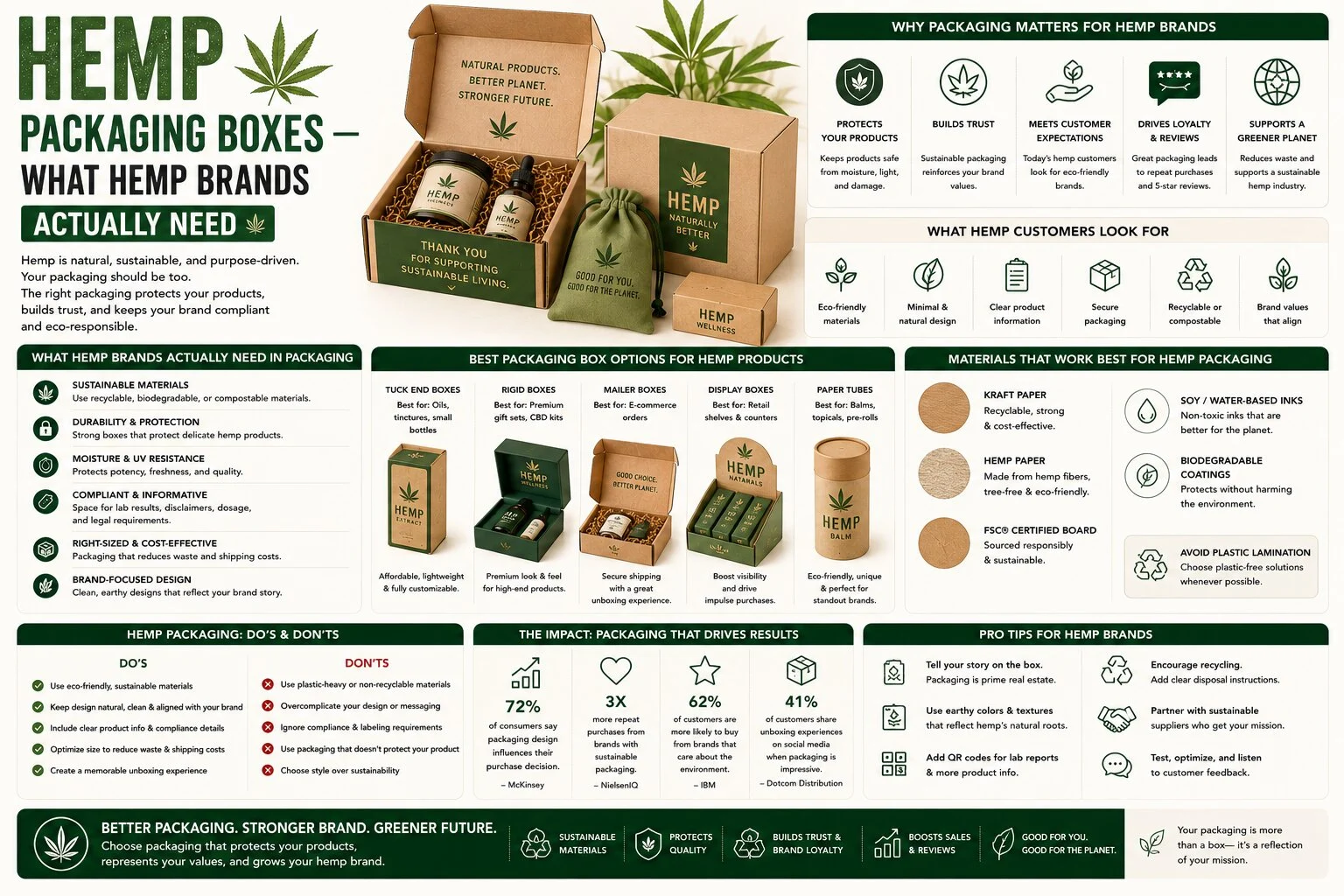
Successful hemp brands frequently use:
- Kraft materials
- Green and earth-tone palettes
- Botanical illustration elements
- Clean typography
- Matte finishes
- Natural textures
These design choices communicate transparency, simplicity, and connection to plant-based ingredients.
Why Natural Packaging Dominates
Consumers shopping in hemp wellness categories often respond positively to packaging that feels natural and approachable.
Packaging that appears overly pharmaceutical can feel disconnected from what many hemp shoppers expect.
This doesn’t mean every hemp package must look rustic.
It means the design should align with customer expectations.
Research shows that over 60% of hemp product consumers actively seek brands using natural-looking packaging materials when purchasing wellness products.
When Breaking the Rules Works
Not every hemp brand should look the same.
Alternative approaches work particularly well for:
- Premium hemp product lines
- Fitness-focused hemp products
- Modern wellness brands
- Hemp food products
- Direct-to-consumer subscription brands
In these categories, minimalist black-and-white packaging, premium rigid structures, or bold contemporary colors often outperform traditional green packaging.
Hemp vs Cannabis Packaging
One important distinction is that hemp packaging and cannabis packaging are not identical.
Cannabis packaging often emphasizes compliance-heavy structures and recreational market positioning.
Hemp packaging typically leans toward wellness, lifestyle, food, and personal care aesthetics.
The visual language reflects those different customer expectations.
Hemp Oil Packaging Specifically
Among all hemp categories, hemp oil packaging has some of the most specialized requirements.
Structural Requirements for Hemp Oil Packaging
Most hemp oil products are packaged in glass bottles with droppers.
This creates several packaging priorities:
- Precise bottle fit
- Glass protection
- Dropper protection
- Tamper-evident features
- Adequate label space
Even minor bottle movement can increase breakage risk during shipping.
Best Materials for Hemp Oil Packaging
Different positioning strategies call for different materials.
Kraft Packaging
Ideal for natural and artisan brands.
Many companies also draw inspiration from our Kraft Packaging Boxes resource because kraft materials remain one of the most popular hemp packaging choices.
White Paperboard
Creates a cleaner, more clinical appearance.
Often used for minimalist wellness branding.
Best for premium tincture lines and gift-oriented products.
Creates stronger shelf presence and perceived value.
Insert Systems for Glass Bottles
Custom inserts provide:
- Bottle stabilization
- Reduced shipping damage
- Better unboxing presentation
Foam, corrugated, and paperboard inserts are all common solutions.
Quality Perception Before Opening
Customers cannot evaluate the product before purchase.
Packaging becomes the first quality signal.
A precisely fitted, professionally printed box communicates attention to detail before the bottle is ever removed.
Brands exploring tincture packaging strategies often review concepts similar to those CBD Oil Box Design because many structural packaging considerations overlap.
Hemp Food and Snack Packaging
Hemp food products operate under different packaging requirements than wellness-focused hemp products.
Additional Packaging Considerations
Food packaging typically requires accommodation for:
- Nutrition information
- Ingredient declarations
- Food safety requirements
- Allergen information
- Shelf-life considerations
Again, businesses should verify current regulatory requirements before production.
Design Strategy for Hemp Foods
Food products generally benefit from food-category visual cues.
Consumers purchasing hemp snacks want packaging that looks appetizing.
This often means:
- Strong product photography
- Ingredient visuals
- Bold colors
- Window packaging
- Taste-oriented design elements
Food packaging frequently performs better with more energetic visuals than wellness packaging.
Popular Hemp Food Packaging Formats
Common structures include:
- Stand-up pouches
- Folding cartons
- Kraft presentation boxes
- Window packaging
- Subscription packaging formats
Moisture and Shelf-Life Protection
Packaging materials must be selected according to product requirements.
Barrier properties become especially important for products sensitive to moisture, oxygen, or environmental exposure.
Custom Hemp Boxes – Branding Considerations
The hemp market has become increasingly crowded.
That creates a packaging challenge.
Building Brand Recognition
Strong hemp packaging systems rely on consistency.
Focus on:
- Consistent logo placement
- Unified color systems
- Repeatable typography
- Cohesive structural design
Customers should recognize your products immediately across different SKUs.
Standing Out from Similar Hemp Brands
Many hemp brands look nearly identical.
Green.
Kraft.
Minimalist.
Botanical.
That approach works—but it also creates visual sameness.
Differentiation often comes from:
- Unexpected color choices
- Unique structural formats
- Premium finishing techniques
- Distinctive typography
Popular Finishing Options
Some of the most effective hemp packaging finishes include:
- Matte lamination
- Spot UV logo enhancement
- Kraft with foil accents
- Embossing
- Debossing
Matte finishes remain the dominant choice because they reinforce natural wellness positioning.
Window Packaging
Transparency matters in hemp markets.
Window packaging allows customers to see the product before purchasing.
This often improves trust and reduces hesitation, particularly for food products.
Hemp Packaging Wholesale and Scaling
Eventually, successful hemp brands outgrow short-run packaging.
That’s when wholesale production becomes important.
Signs You’re Ready for Wholesale Packaging
Common indicators include:
- Multiple product variants
- Growing ecommerce volume
- Retail expansion
- Subscription programs
- Repeat production schedules
Operational Advantages
Wholesale packaging offers more than lower pricing.
Benefits include:
- Consistent compliance language
- Improved print consistency
- Better inventory planning
- Reduced production variability
- More reliable supply chains
Production Timelines
Many hemp packaging projects can be produced within approximately 7–10 business days depending on specifications, artwork approval, and production complexity.
Complex structures or specialty finishes may require additional time.
FSC-Certified Packaging Options
Many hemp consumers value sustainability.
FSC-certified materials provide a credible way to support environmentally conscious positioning while maintaining professional presentation.
Flexible Minimum Orders
Many suppliers now offer MOQs starting around 25 boxes, making custom packaging accessible even for emerging hemp brands.
This flexibility helps founders launch professionally without committing to excessive inventory.
Conclusion
Successful hemp packaging requires balancing two priorities that are equally important.
First, your packaging must support compliance requirements and provide room for accurate product information. Second, it must communicate the natural wellness positioning customers expect from hemp brands.
Neither can be sacrificed.
The most practical approach is to start with compliance planning before moving into visual design. Once required information and regulatory considerations are addressed, you can build a distinctive brand identity around approved packaging elements.
If you’re developing a hemp product line, explore our custom hemp boxes including tincture packaging, food packaging, and wholesale hemp systems designed for hemp brands across the United States.